
|
glass notes photo library |
|
shop windows: |
|
next page previous page |
| e-mail us |


shop window: pre-War glass (page 2 of 4)

 |
 |
 |
 |
 |
Click on any photo to see it full size, then click the 'back' arrow of your browser to return here
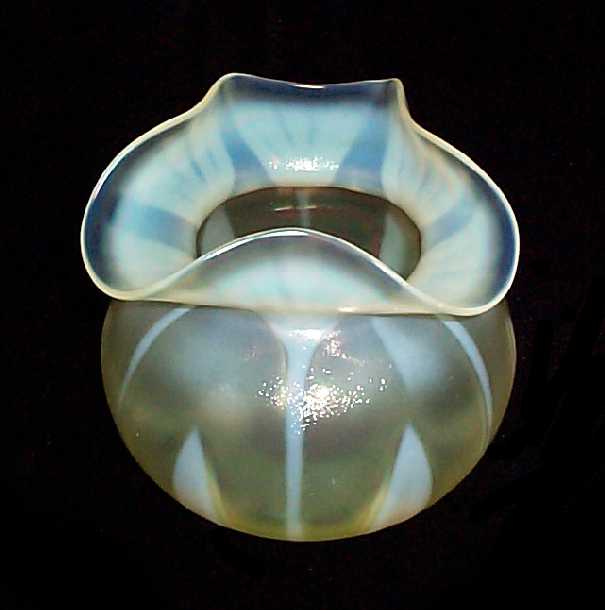
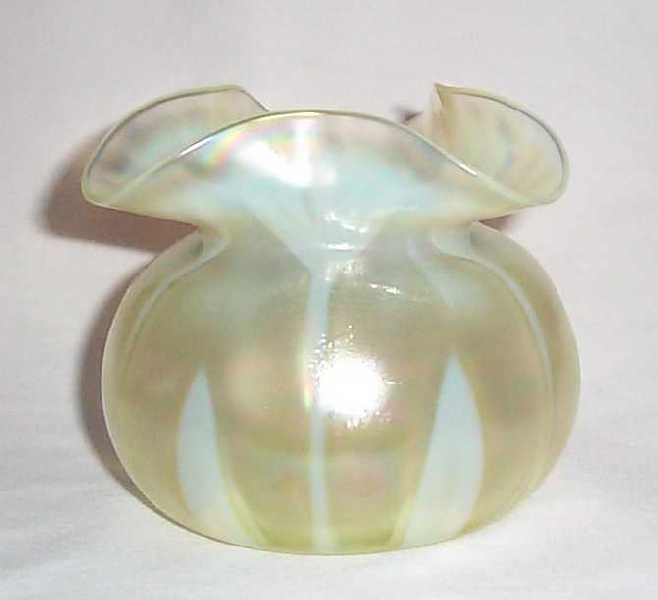
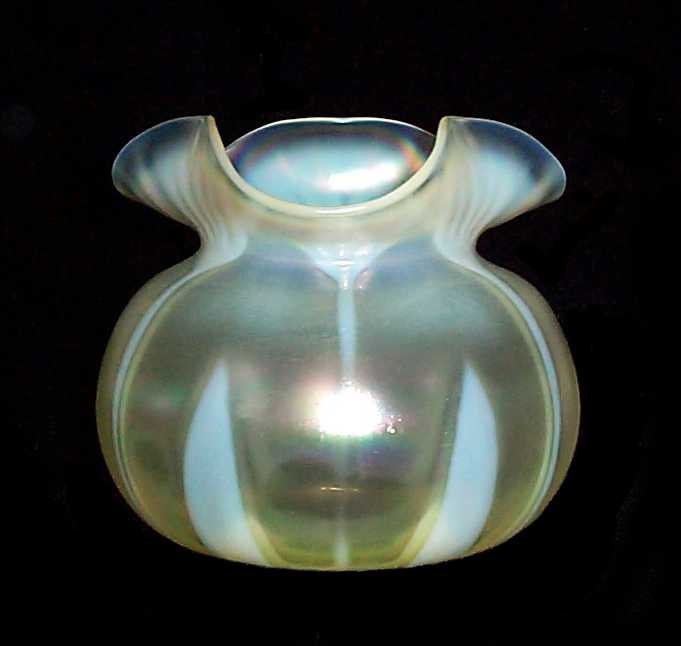
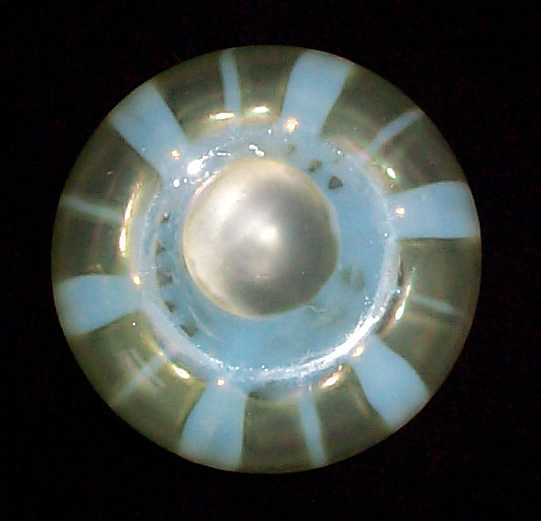
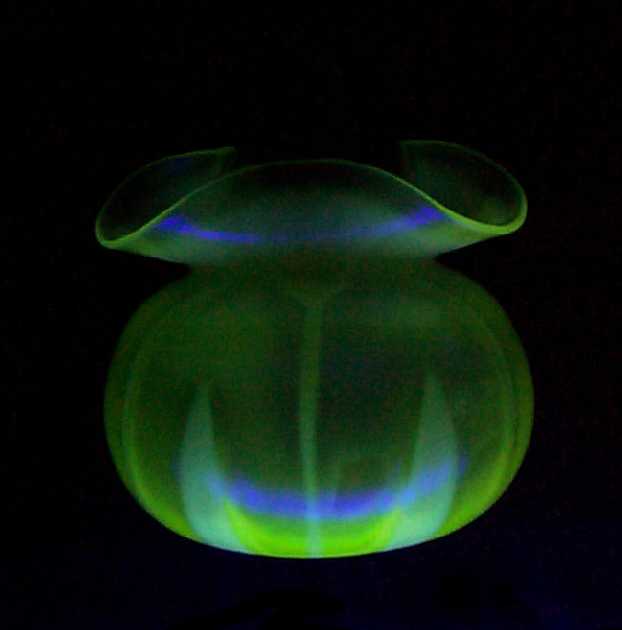
A very pretty John Walsh Walsh satin-iridescent vaseline-glass vase (shown from various angles, and under ultraviolet light at right), with a dip-moulded floral pattern that was registered by the glass works on 23rd February 1905 (RD number 450823)
| Our reference: | 8626 | Date: | 1900s |
| Manufacturer: | Walsh | Origin: | England |
| Dimensions: | height 10 cm, weight 340 gm | ||
| Condition: | very good | ||
 |
 |
 |
Click on any photo to see it full size, then click the 'back' arrow of your browser to return here
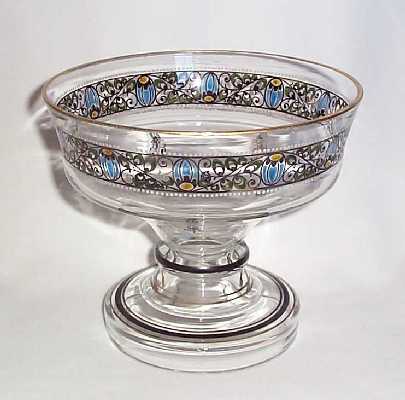
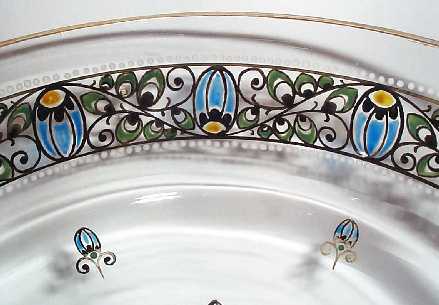
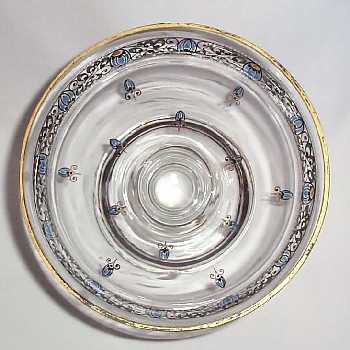
A delightful hand-enamelled comport that we are sure is by either the Kamenický Šenov or the Haida (Nový Bor) Glass School, c 1920
| Our reference: | 8843 | Date: | c 1920 |
| Manufacturer: | Kamenický Šenov or Haida Glass School |
Origin: | Bohemia |
| Dimensions: | height 14 cm, weight 560 gm | ||
| Condition: | very good | ||
 |
 |
 |
 |
 |
Click on any photo to see it full size, then click the 'back' arrow of your browser to return here
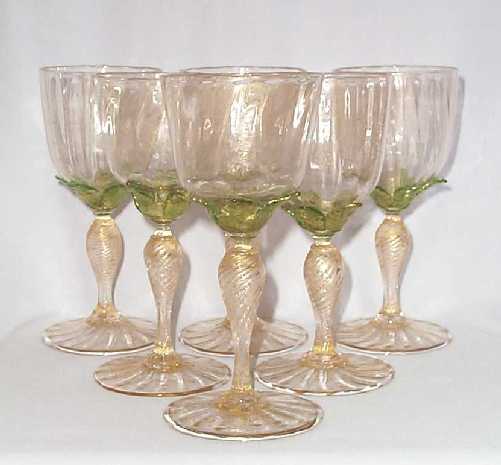
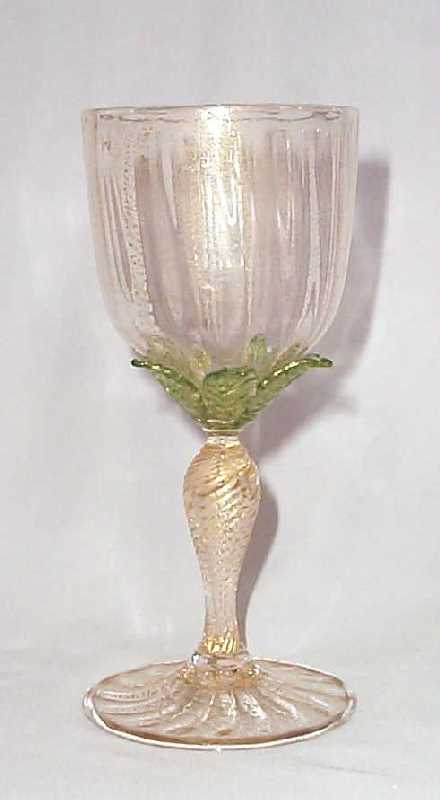
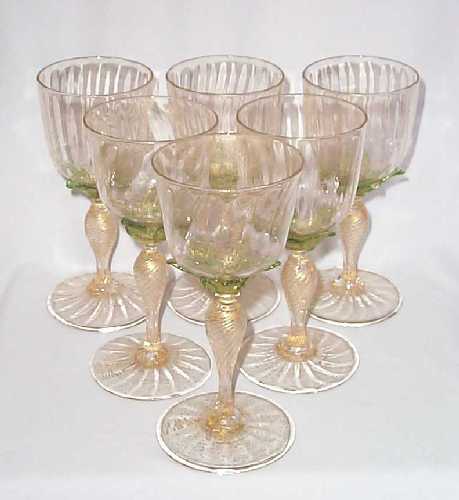
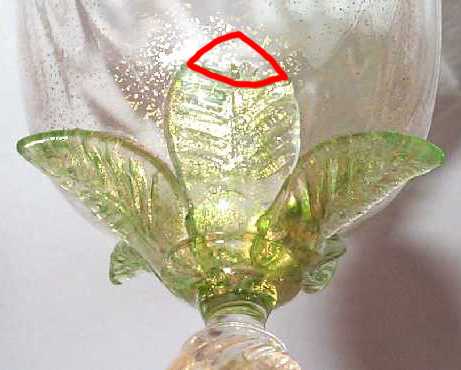
A set of six Venetian wine-glasses, the wrythen bowls supported by green leaves, on spiral-twist inverted baluster stems, with overall gold-leaf. From the general style, we think they date from about the 1930s
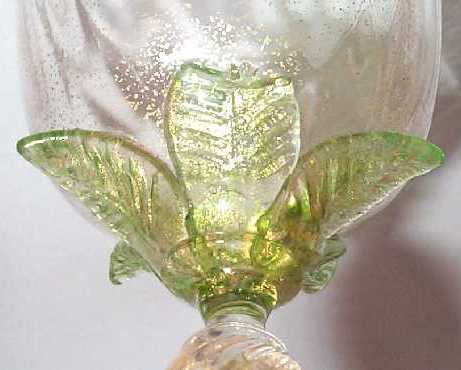
Sadly, the tip of one of the leaves on one of the glasses is missing (shown in the detail second from right, and again, outlined in red, in the detail at right), but this is more than reflected in the extremely low asking price. A single, modern Murano wine-glass of this quality could cost as much as the asking price for this entire set
| Our reference: | 8807 | Date: | c 1930s |
| Manufacturer: | unknown | Origin: | Italy |
| Dimensions: | height 16 cm, weight 740 gm (the set) | ||
| Condition: | see description | ||
 |
 |
 |
 |
 |
 |
 |
Click on any photo to see it full size, then click the 'back' arrow of your browser to return here
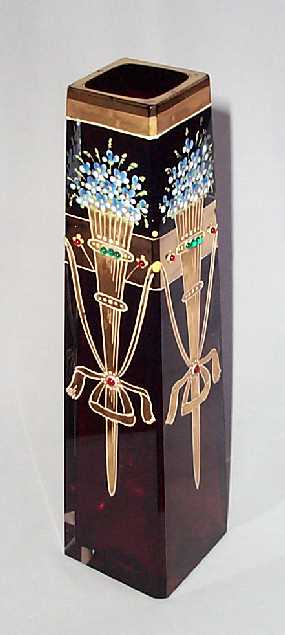
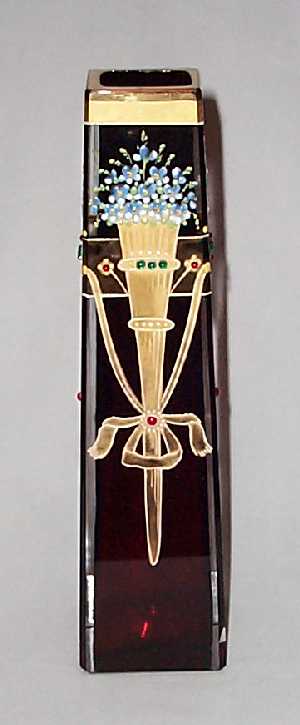
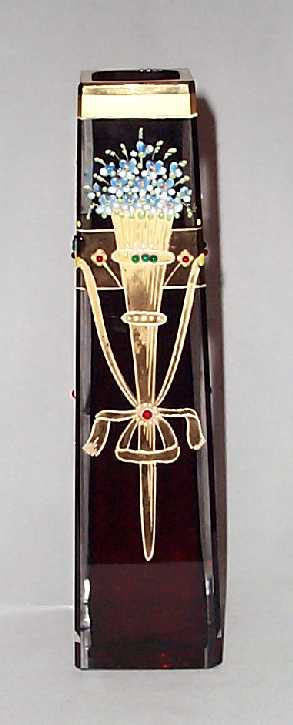
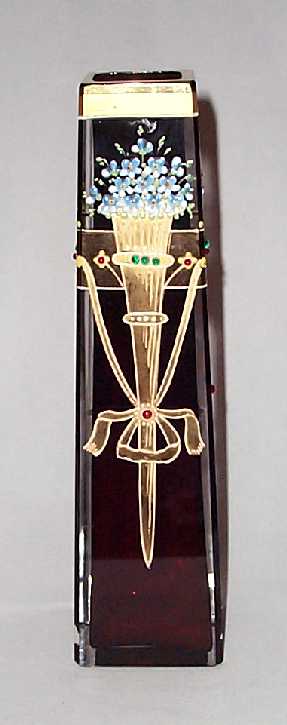
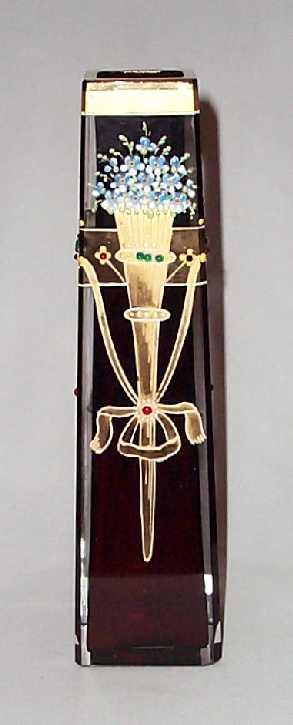
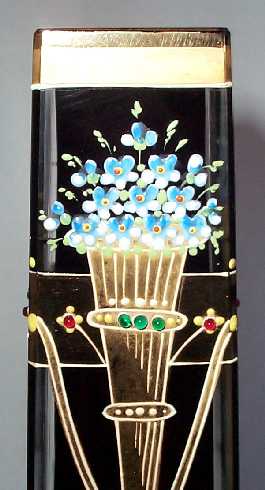
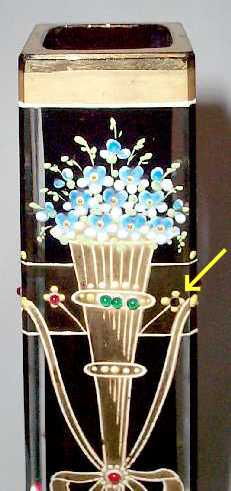
A heavily-cased ruby-red vase of square section, hand-gilded and -enamelled, with applied coloured 'jewels'. From the glassworks of Josef Riedel in Polaun, Bohemia, circa 1900s
The vase is in generally good condition, with just one 'jewel' missing (arrowed in yellow at right) out of a total of twenty-four, which is pretty good for its age!
| Our reference: | 8829 | Date: | 1900s |
| Manufacturer: | Josef Riedel |
Origin: | Bohemia |
| Dimensions: | height 21.5 cm, weight 500 gm | ||
| Condition: | very good | ||
 |
 |
Click on any photo to see it full size, then click the 'back' arrow of your browser to return here
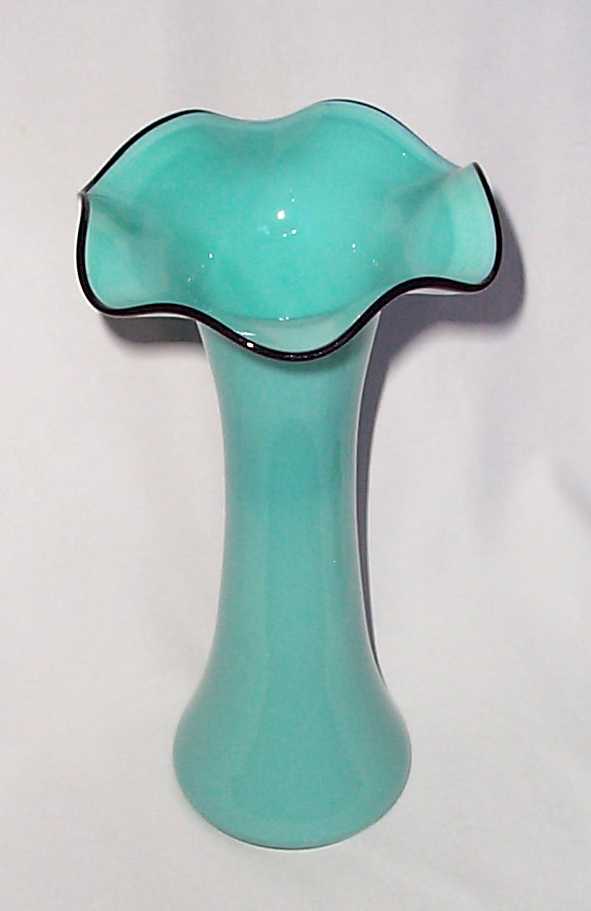
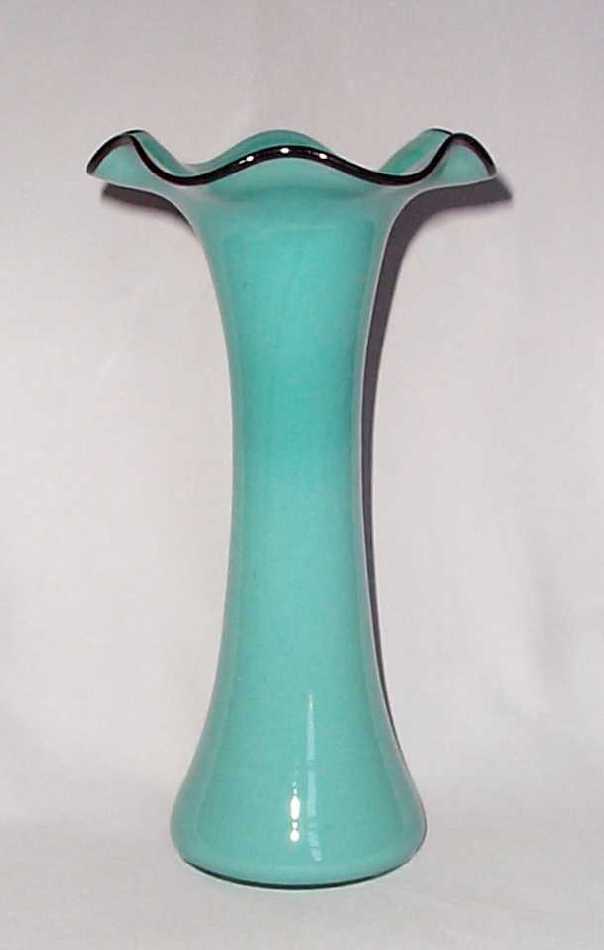
A Czechoslovakian Tango vase in a relatively less common cased turquoise colour, with the usual applied black rim. Tango pieces were very much a product of the 'Jazz Age' of the 1920s and 30s, and were made in all shapes, colours and sizes by various different glassworks, including Loetz, Wilhelm Kralik, Franz Welz, Anton Rückl and others. From the shape, we think this one is probably from the Kralik works
| Our reference: | 8800 | Date: | c 1920s |
| Manufacturer: | probably Kralik |
Origin: | Czech |
| Dimensions: | height 24 cm, weight 490 gm | ||
| Condition: | very good | ||
 |
 |
 |
 |
 |
 |
Click on any photo to see it full size, then click the 'back' arrow of your browser to return here
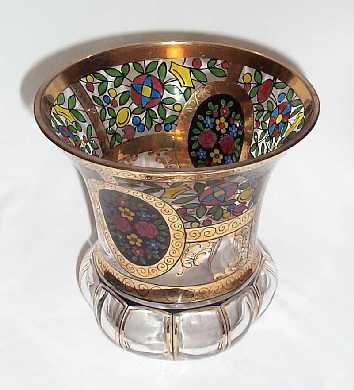
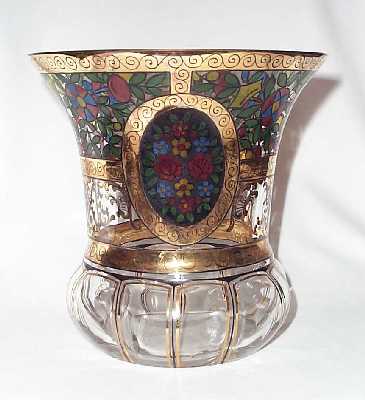
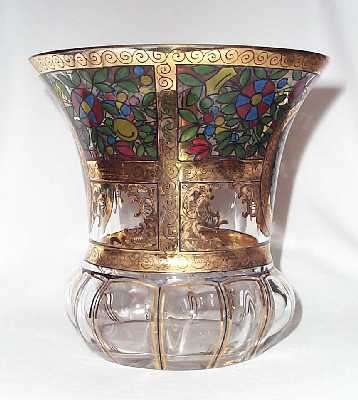
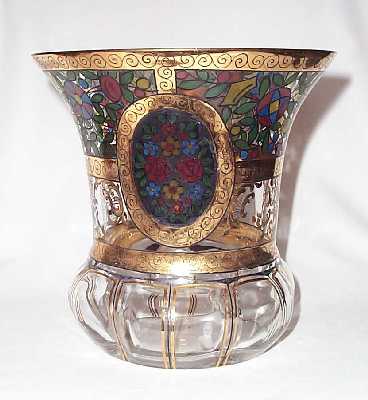
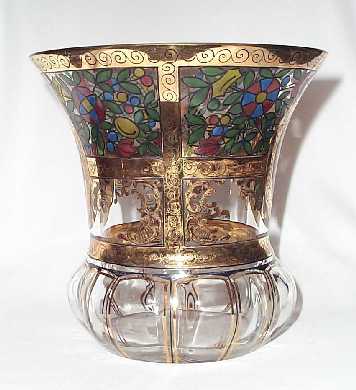
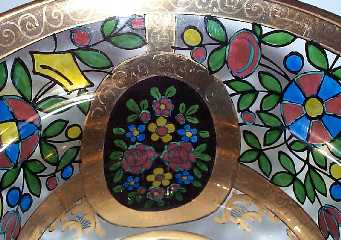
A handsome Bohemian vase, the flared body with lobed base, with hand-applied gilt and transmalerei (transparent enamel) decoration, circa 1900s. Almost certainly from the Haida refinery of Julius Mühlhaus
| Our reference: | 8534 | Date: | c 1900s |
| Manufacturer: | probably Mühlhaus |
Origin: | Bohemia |
| Dimensions: | height 16.5 cm, weight 1015 gm | ||
| Condition: | very good | ||