
|
glass notes photo library |
|
shop windows: |
|
next page previous page |
| e-mail us |


shop window: pre-War glass (page 3 of 4)

 |
 |
 |
 |
Click on any photo to see it full size, then click the 'back' arrow of your browser to return here
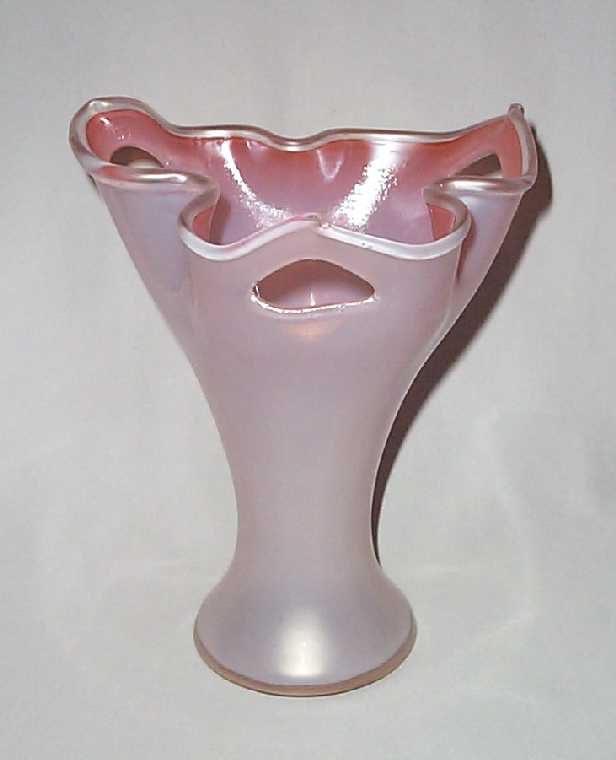
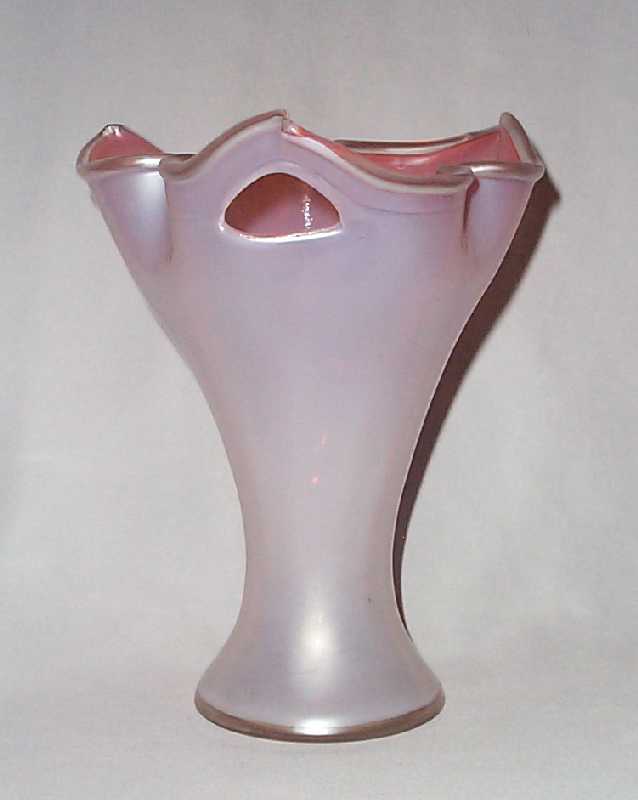
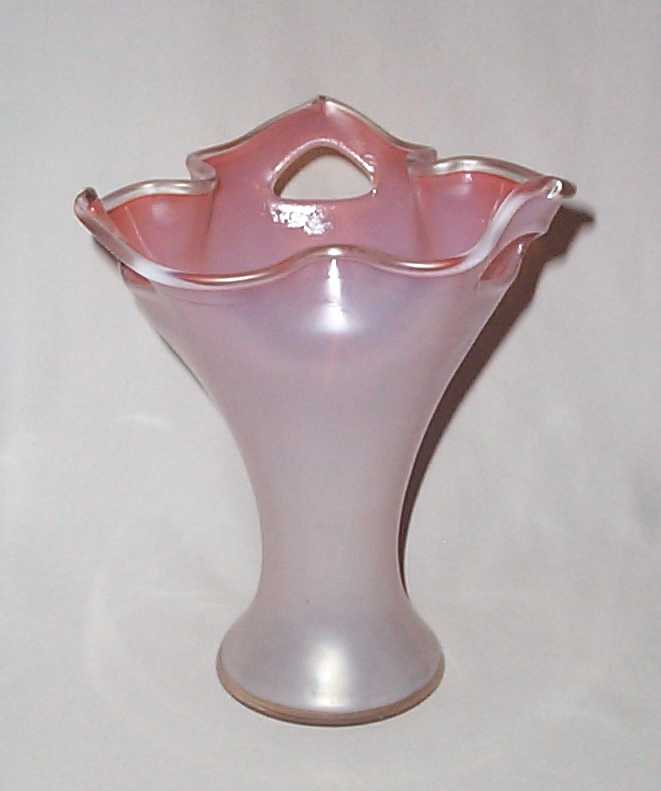
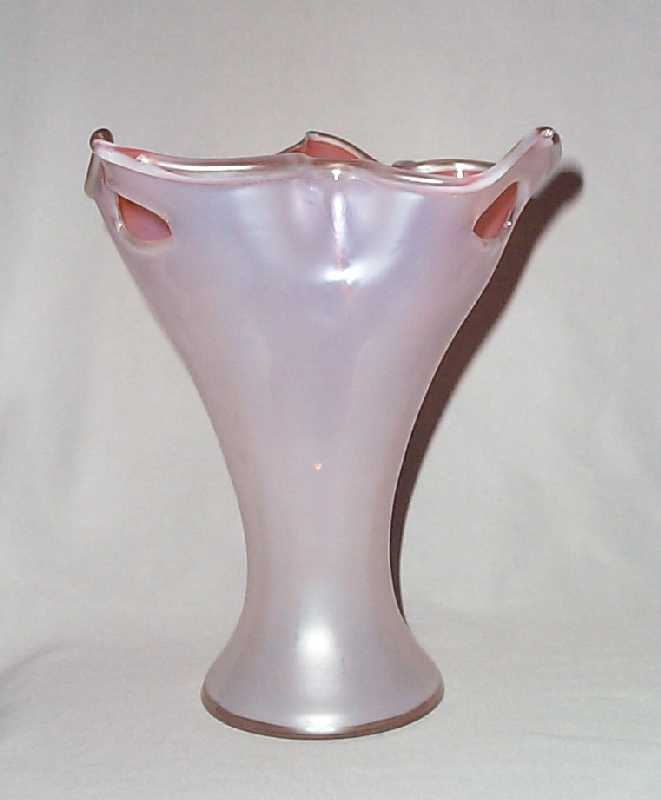
A very attractive Kralik pearl-iridescent vase of pierced Art Nouveau form, the interior shading to a salmon pink at the rim. We've had these in lilac and in pale green before, but not this particular shade
| Our reference: | 8825 | Date: | c 1900s |
| Manufacturer: | Kralik | Origin: | Bohemia |
| Dimensions: | height 20 cm, weight 615 gm | ||
| Condition: | very good | ||
 |
 |
 |
 |
Click on any photo to see it full size, then click the 'back' arrow of your browser to return here
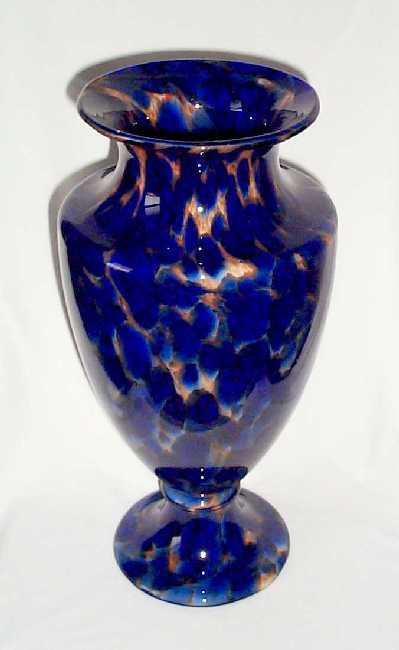
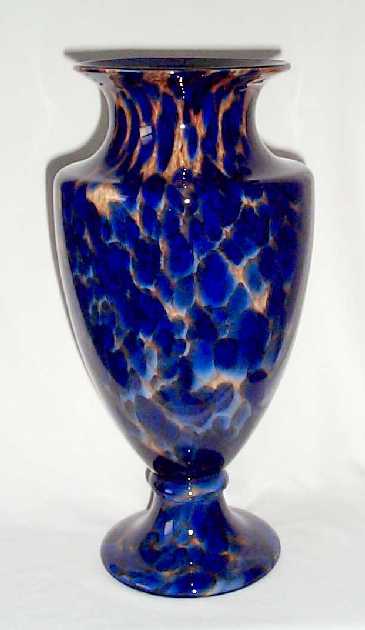
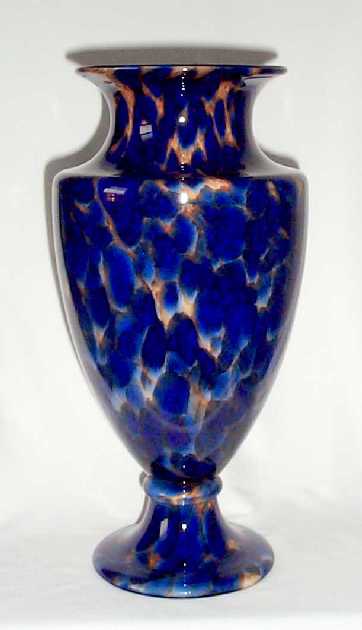
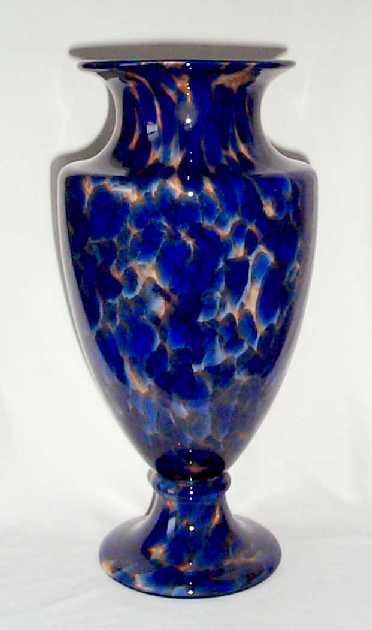
A large and stunning agate- or spatter-glass vase, in shades of blue and caramel. On the only previous occasion that we had a piece with similar decor, it was confirmed as a late product of the Loetz factory by a German colleague. It is constructed in two parts; the upper part is cased clear, both inside and out, and the foot (separated from the top by an annular knop) is cased clear to the exterior, but white to the interior (see detail below)
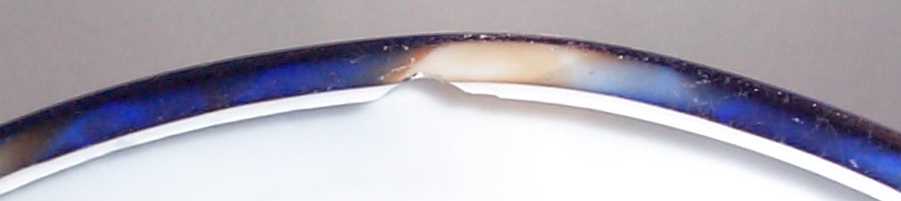
Because the foot-rim has been folded over and then ground flat, it has left a sharp edge to the interior of the rim, which has suffered a few nibbles in places (the most obvious one is shown at top centre in the detail below), but none of them are visible when the vase is standing
| Our reference: | 8684 | Date: | c 1930 |
| Manufacturer: | Loetz | Origin: | Germany |
| Dimensions: | height 34 cm, weight 2230 gm | ||
| Condition: | very good | ||
 |
 |
 |
Click on any photo to see it full size, then click the 'back' arrow of your browser to return here
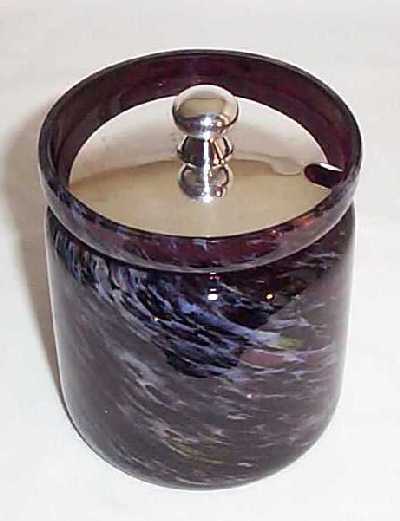
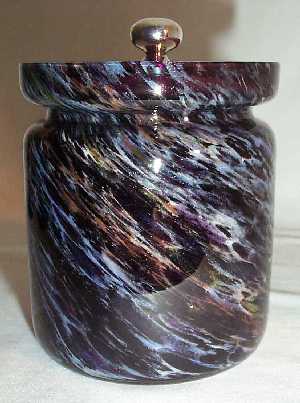
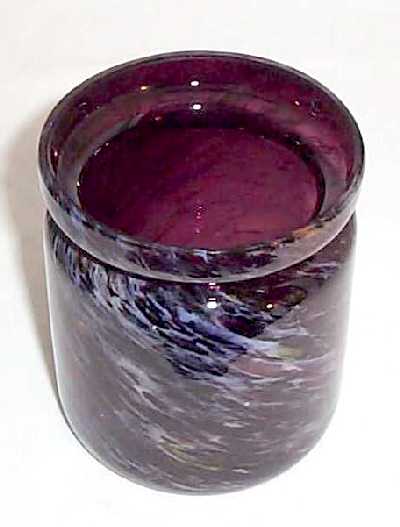
A Stevens & Williams amethyst-bodied "splash glass" jam-pot, the silver-plated lid inscribed 'Argyll' underneath
| Our reference: | 7149 | Date: | c 1930 |
| Manufacturer: | Stevens & Williams |
Origin: | Stourbridge, England |
| Dimensions: | height 8.5 cm, weight 320 gm | ||
| Condition: | very good | ||
 |
 |
 |
 |
 |
 |
Click on any photo to see it full size, then click the 'back' arrow of your browser to return here
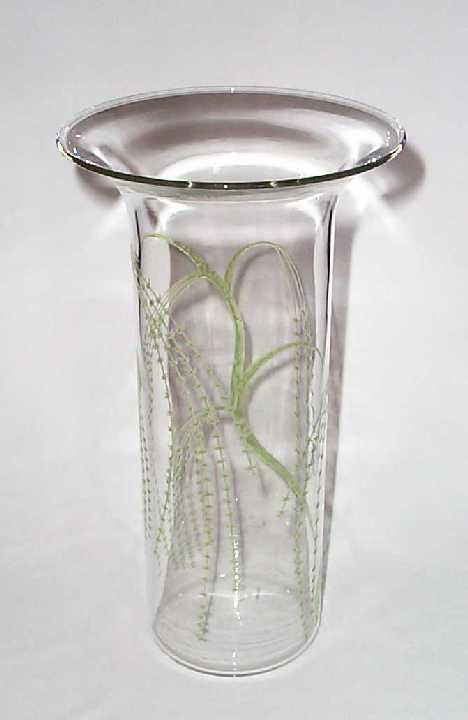
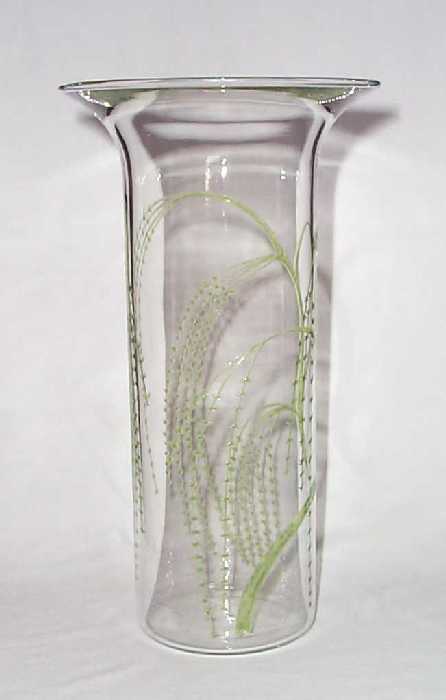
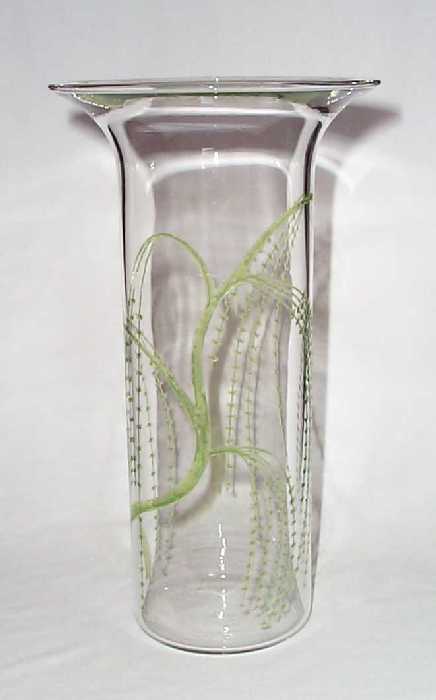
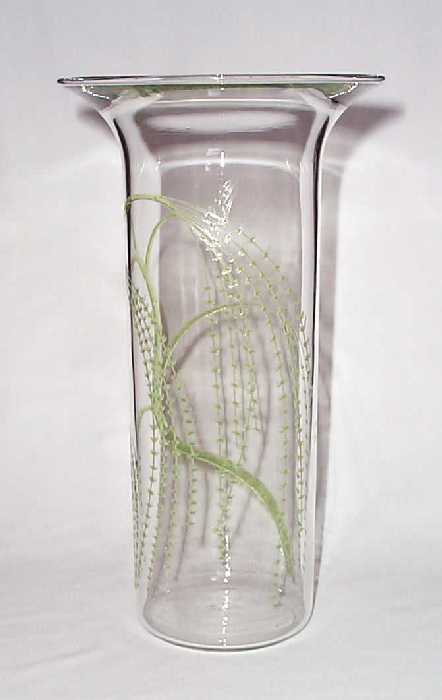
A bit of a mystery, this very elegant vase. The decoration appears to be a stylised, rather oriental-looking, 'weeping willow' in translucent green enamel, which has been laid on so thickly that it gives it a 'cameo' effect
Our feeling is that the vase is European (there is something a bit 'Wiener Werkstätte-ish' about the design), and dates from about the 1920s, though we are not certain of that. There is no doubting the quality of the workmanship - does anyone out there know who made it?
| Our reference: | 8748 | Date: | c 1920s |
| Manufacturer: | unknown | Origin: | uncertain |
| Dimensions: | height 24 cm, weight 510 gm | ||
| Condition: | very good | ||
 |
 |
 |
 |
Click on any photo to see it full size, then click the 'back' arrow of your browser to return here
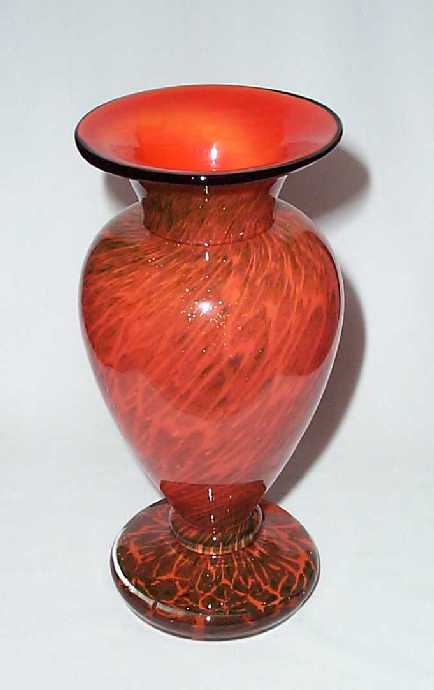
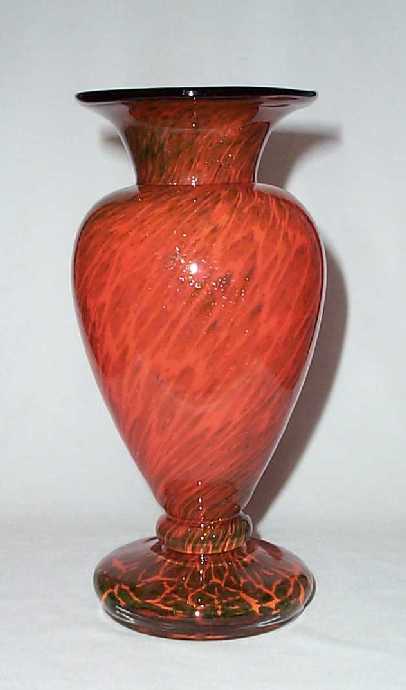
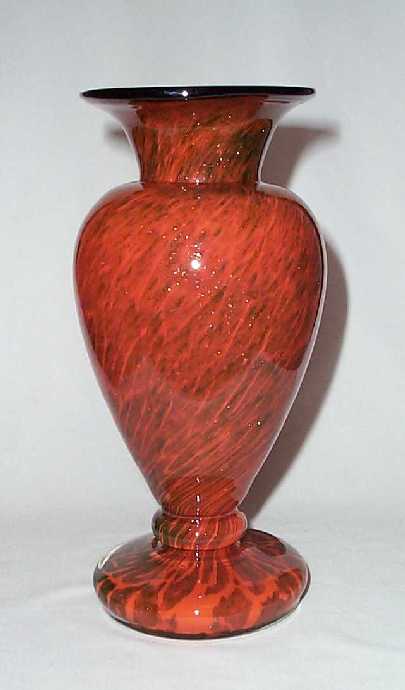
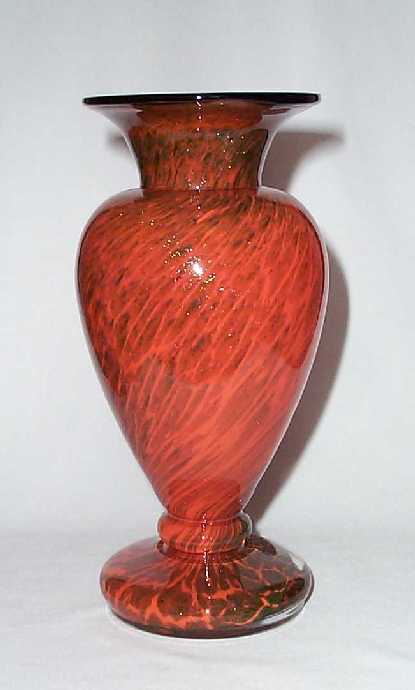
A very interesting 'Tango'-style vase, cased clear over a green-aventurine patchwork, over an orange interior, with an applied black rim. The vase has no pontil-mark, so must have been held by a 'gadget' while the rim was applied. Probably by either Kralik or Rindskopf
| Our reference: | 8738 | Date: | 1920 |
| Manufacturer: | probably Kralik or Rindskopf |
Origin: | Bohemia |
| Dimensions: | height 18 cm, weight 410 gm | ||
| Condition: | very good | ||