
|
glass notes photo library |
|
shop windows: |
|
next page previous page |
| e-mail us |


shop window: pre-War glass (page 1 of 4)

 |
 |
 |
Click on any photo to see it full size, then click the 'back' arrow of your browser to return here
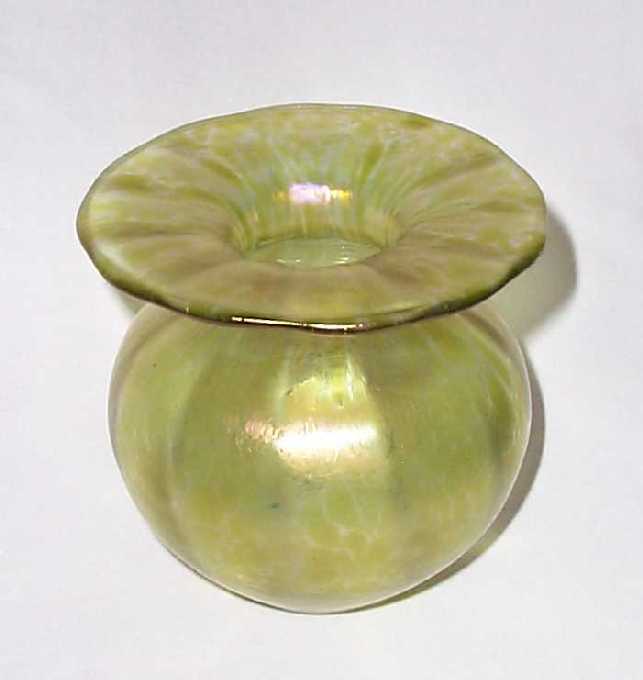
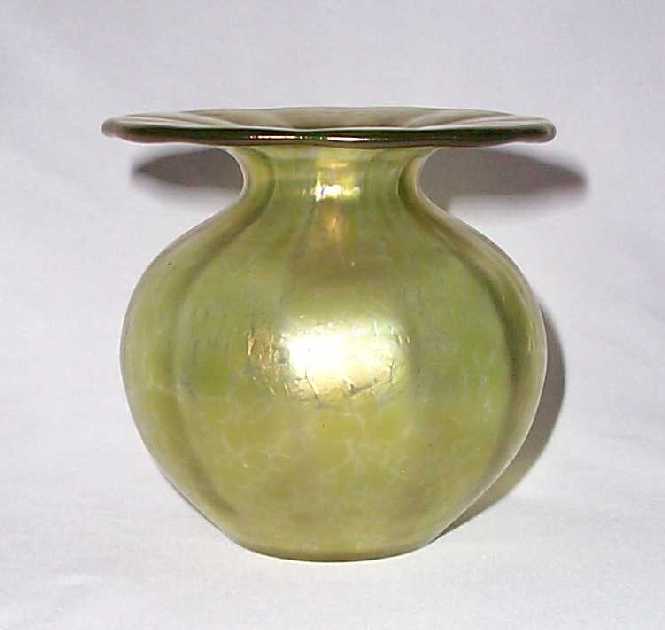
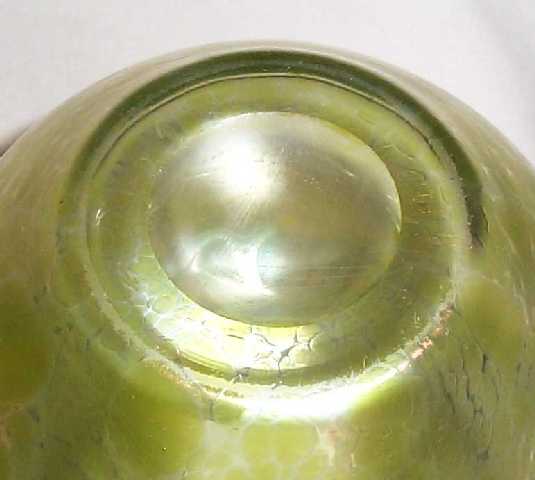
A Loetz Ciselé vase, the clear, optic-ribbed body speckled with green, with overall iridescence. The shape is in the style of designs by Dr Christopher Dresser, usually made for the London importer Max Emanuel. The pontil is ground and polished (right)
| Our reference: | 8778 | Date: | c 1900 |
| Manufacturer: | Loetz | Origin: | Austria |
| Dimensions: | height 10 cm, weight 290 gm | ||
| Condition: | very good | ||
 |
 |
 |
 |
 |
 |
Click on any photo to see it full size, then click the 'back' arrow of your browser to return here
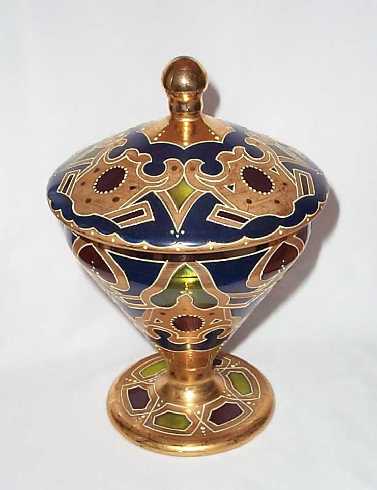
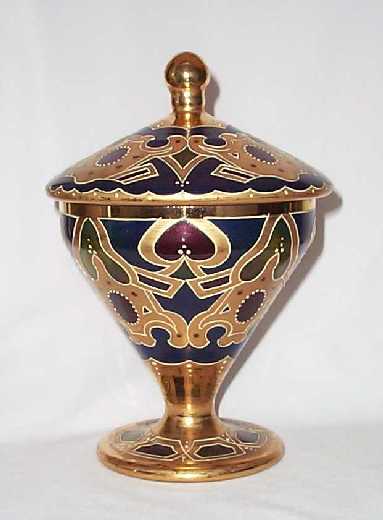
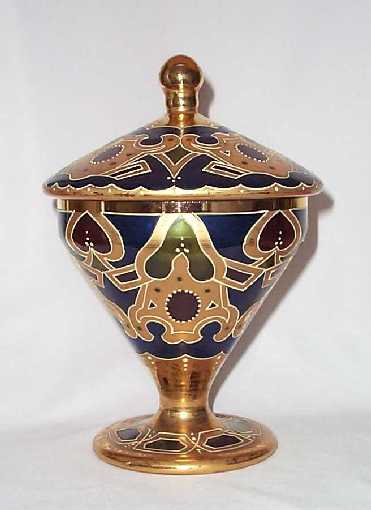
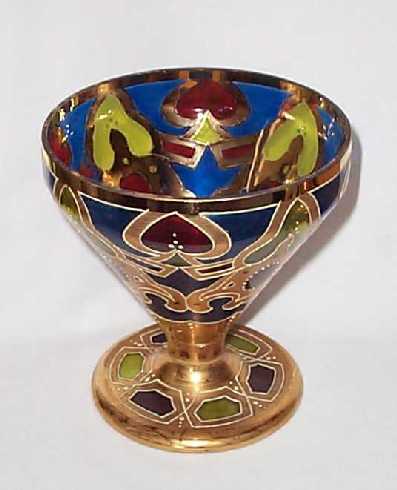
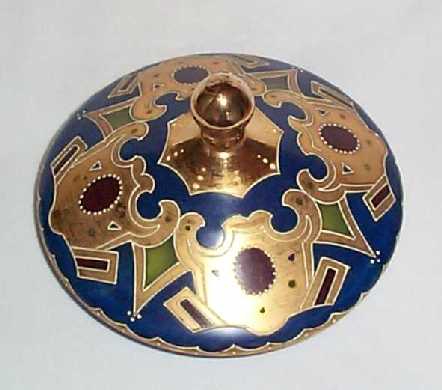
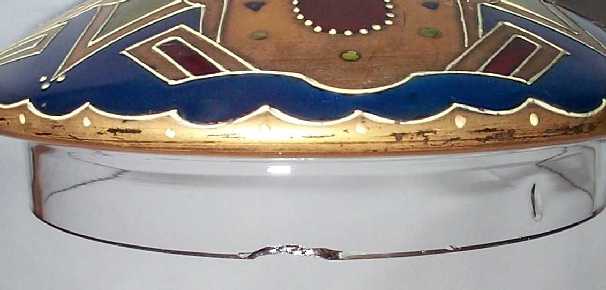
An early 20th Century Bohemian gilded and transmalerei enamelled lidded pot, decorated in an almost Islamic style. There is a shallow chip to the underside of the rim of the lid (shown in the detail at right) which could easily be ground out if required, and is more than reflected in the low asking price
| Our reference: | 8937 | Date: | c 1920s |
| Manufacturer: | Webb & Corbett | Origin: | England |
| Dimensions: | height 20 cm, weight 665 gm | ||
| Condition: | see description | ||
 |
 |
 |
Click on any photo to see it full size, then click the 'back' arrow of your browser to return here
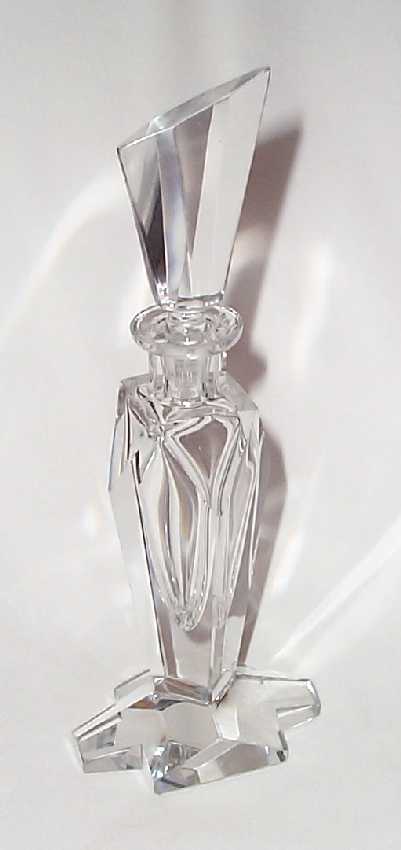
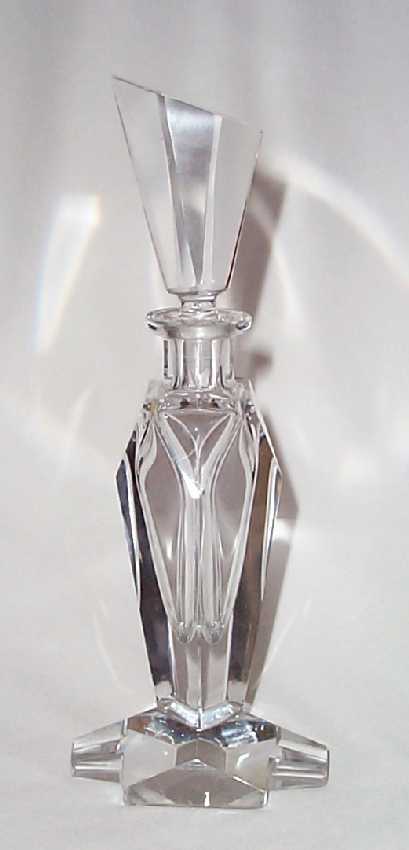
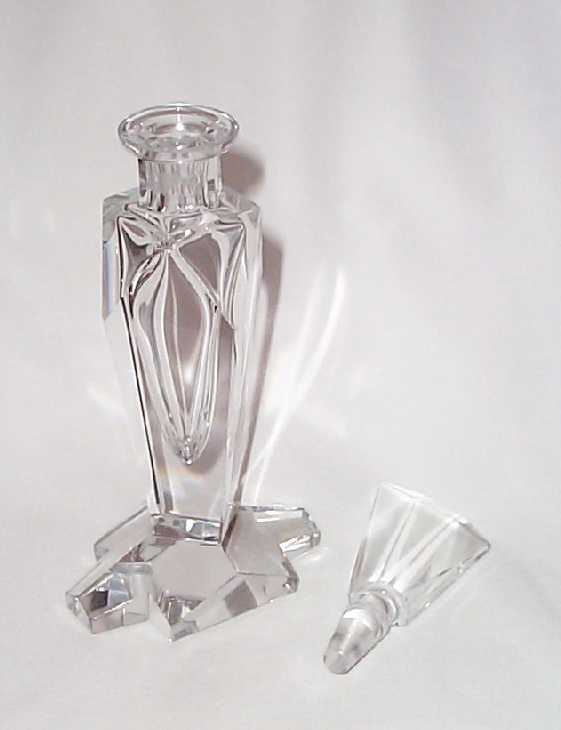
A slab-cut crystal Art Deco scent-bottle on a cruciform base, most probably Czechoslovakian. Stylistically, there is no doubt that the design dates from about the 1920s or 1930s, but whether it was actually made then or later, we really can't say for certain
| Our reference: | 8923 | Date: | probably 1930s |
| Manufacturer: | unknown | Origin: | Czechoslovakia |
| Dimensions: | height 20.5 cm, weight 305 gm | ||
| Condition: | very good | ||
 |
 |
 |
 |
 |
 |
Click on any photo to see it full size, then click the 'back' arrow of your browser to return here
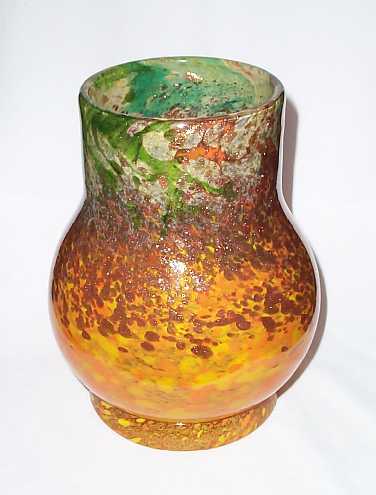
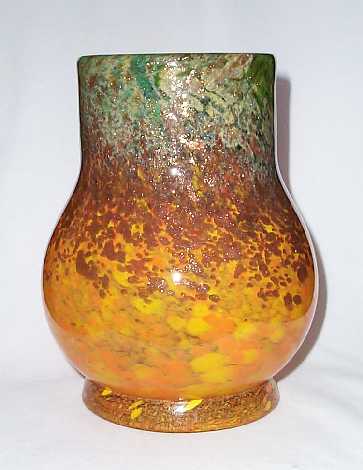
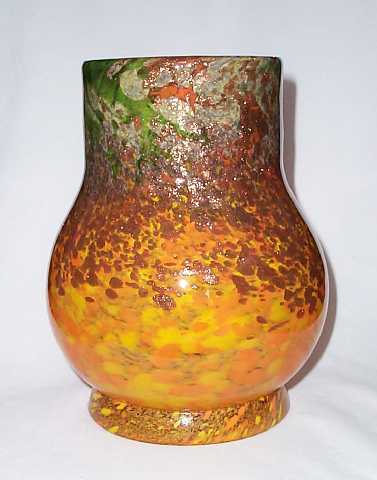
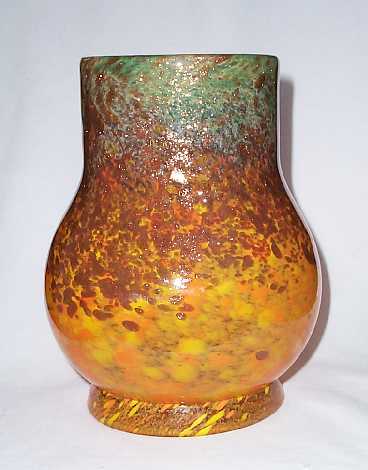
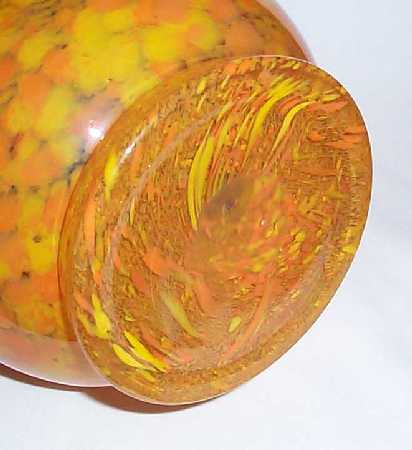
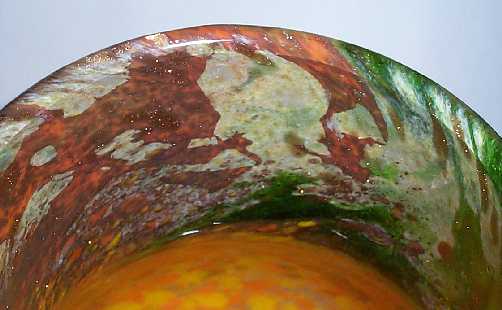
A superb, vibrantly-coloured pre-War Monart vase. The shape is IJ (which is a fairly rare one), the orange and yellow marbled body shading up to patches of green, brown and blue, with heavy use of aventurine particles. The vase has the normal Monart applied foot with matching coloured spatters
| Our reference: | 8915 | Date: | c 1930 |
| Manufacturer: | John Moncrieff | Origin: | Scotland |
| Dimensions: | height 19.5 cm, weight 1265 gm | ||
| Condition: | very good | ||
 |
 |
 |
 |
 |
Click on any photo to see it full size, then click the 'back' arrow of your browser to return here
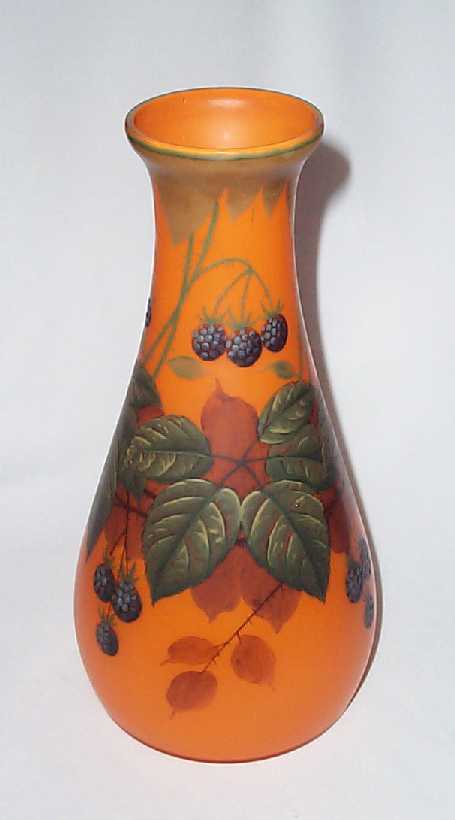
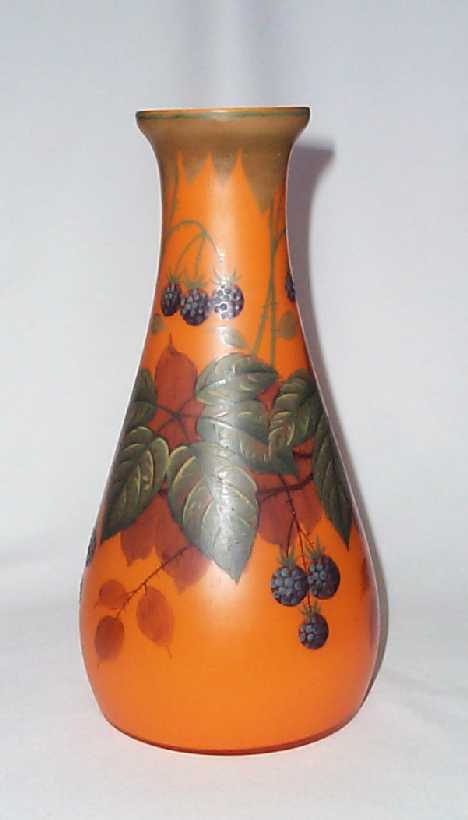
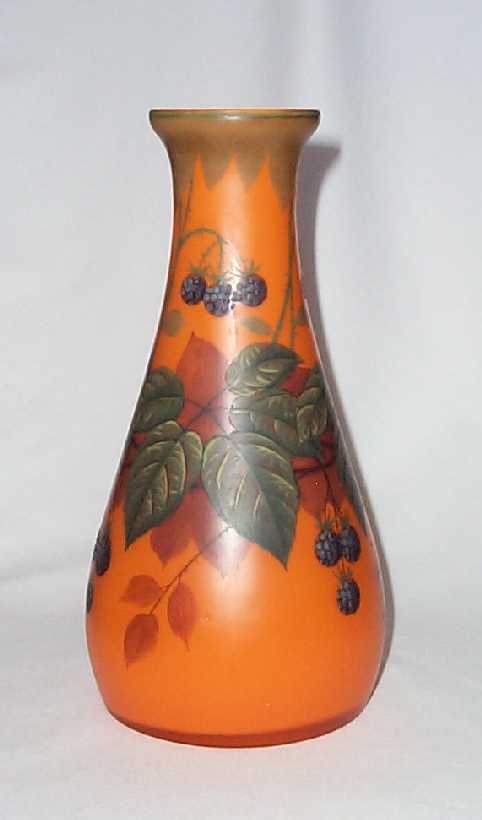
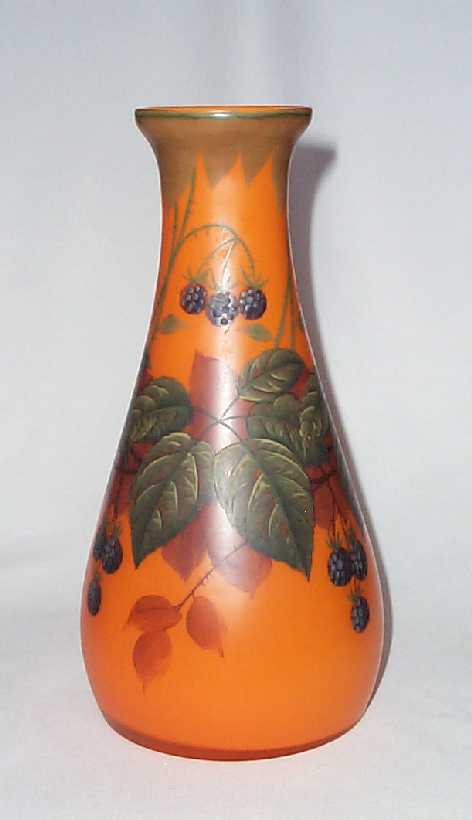
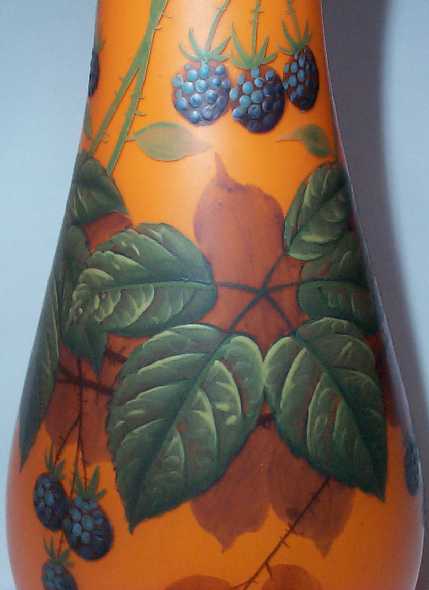
Pretty certainly Czechoslovakian, this vase, cased clear over orange and acid-matted, has been exquisitely hand-enamelled with blackberries, so that it almost resembles cameo glass. We had a smaller version a few years ago with an equally vibrant red body, with identical enamelling, and I haven't seen another since. If anyone thinks they know who decorated this, we'd love to hear from them!
| Our reference: | 8917 | Date: | 1920s or 1930s |
| Manufacturer: | unknown | Origin: | probably Czech |
| Dimensions: | height 21 cm, weight 385 gm | ||
| Condition: | very good | ||
 |
 |
 |
 |
Click on any photo to see it full size, then click the 'back' arrow of your browser to return here
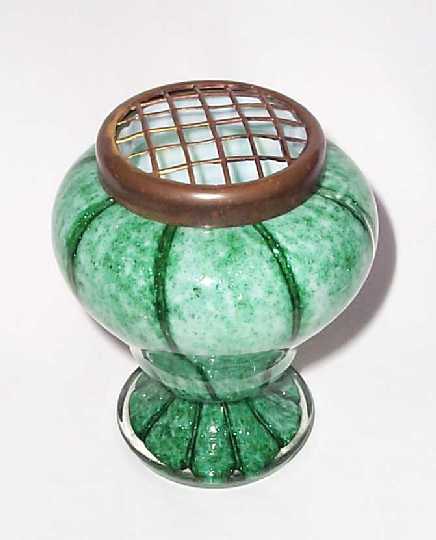
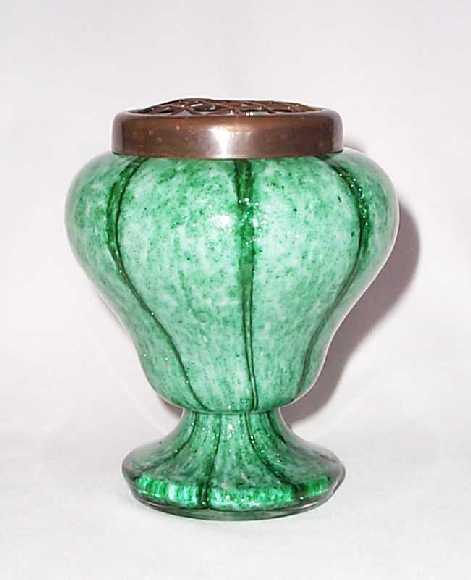
A rose-bowl by Franz Welz of Klostergrab, pale green with green-aventurine particles and darker green stripes, over a white interior. The (original) grille is die-stamped brass
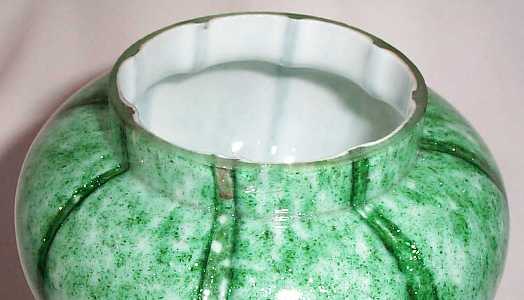
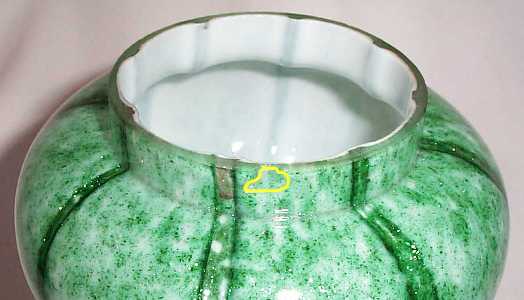
There is a small, shallow chip to the rim (see detail at second right, and outlined in yellow in the detail at right), which is entirely invisible when the grille is in place
| Our reference: | 8876 | Date: | c 1920s |
| Manufacturer: | Welz | Origin: | Bohemia |
| Dimensions: | height 13 cm, weight 390 gm | ||
| Condition: | see description | ||