
|
glass notes photo library |
|
shop windows: |
| next page |
| e-mail us |


shop window: glass before 1900 (page 1 of 3)

 |
 |
 |
 |
 |
 |
Click on any photo to see it full size, then click the 'back' arrow of your browser to return here
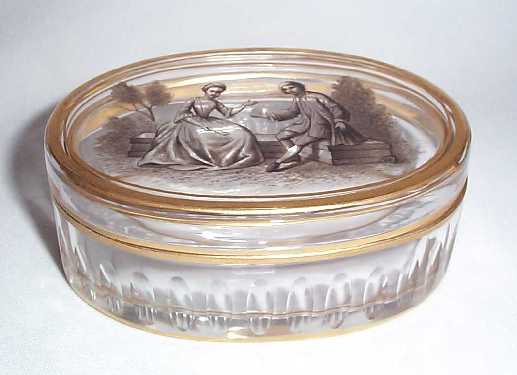
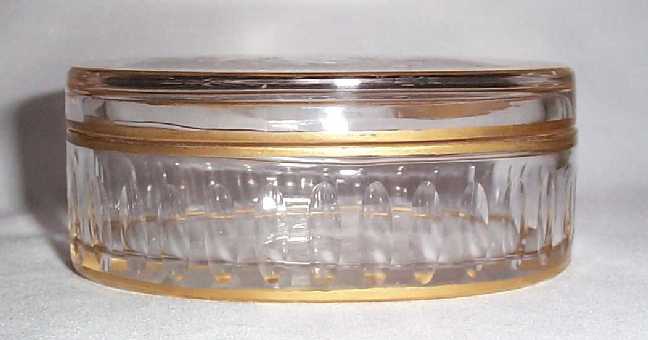
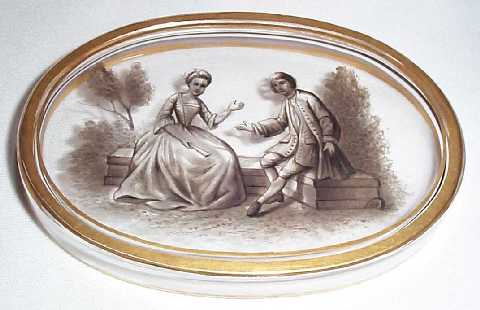
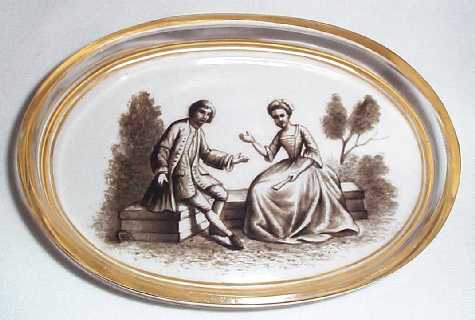
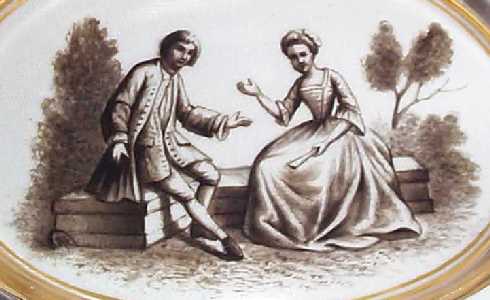
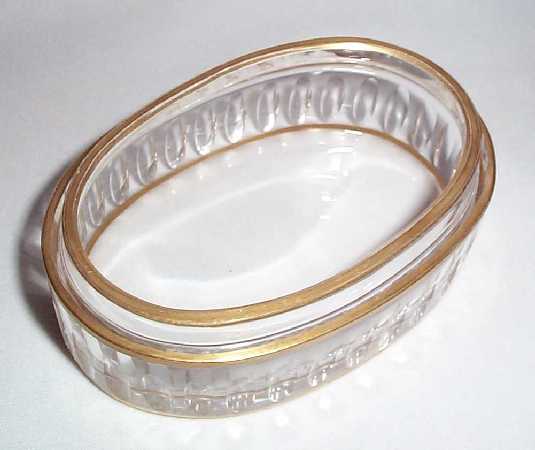
A printy-cut oval box with gilt decoration, and a superbly-executed Schwarzlot-enamelled scene of a lady and gentleman on the lid (both the top and the underside of the lid are shown in the details above), which we believe to have been decorated in the workshop of Josef Lenhardt, possibly for Lobmeyr, although it does not bear the Lobmeyr mark
| Our reference: | 8936 | Date: | 1890s |
| Manufacturer: | Josef Lenhardt |
Origin: | Bohemia |
| Dimensions: | length 9 cm, weight 140 gm | ||
| Condition: | very good | ||
 |
 |
 |
 |
 |
 |
Click on any photo to see it full size, then click the 'back' arrow of your browser to return here
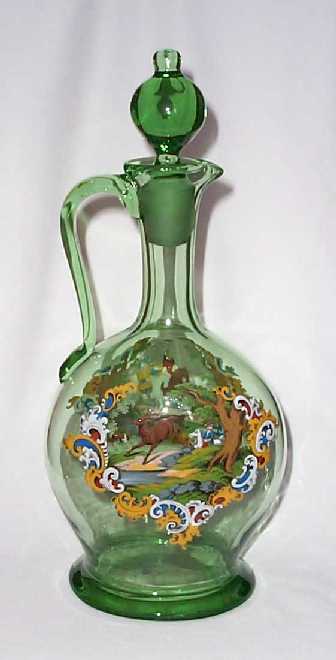
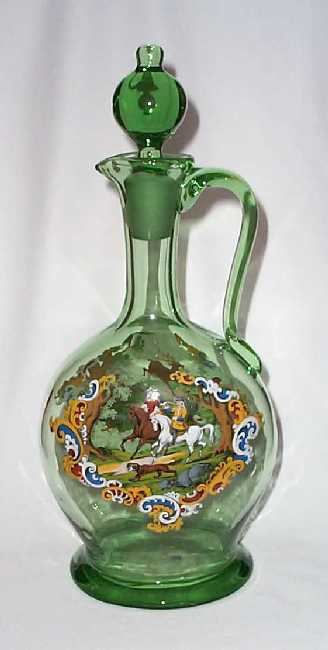
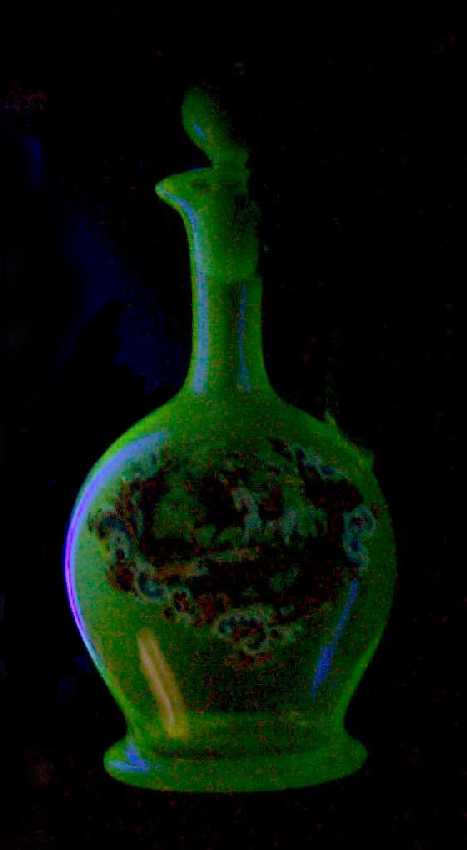
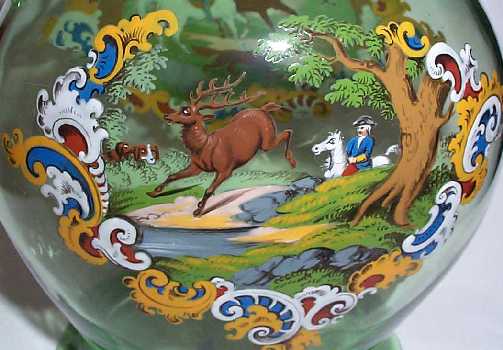
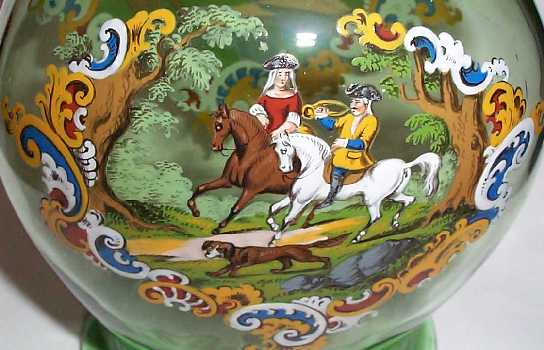
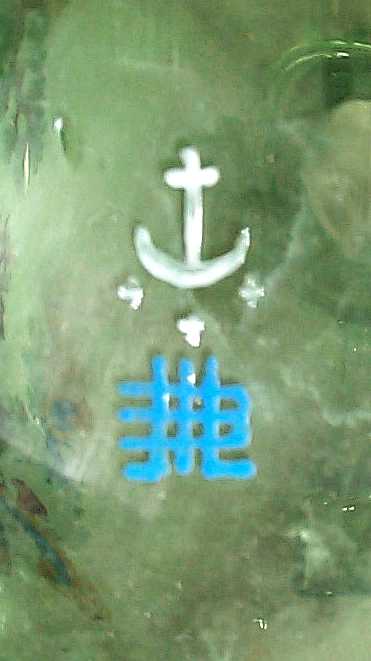
A radium-green claret-jug with hand-enamelled hunting scenes, from the workshop of Anton Ambrosius Egermann (son of Friedrich Egermann) for the Viennese company Lobmeyr. Egermann was noted for his Historismus enamelled glassware, and only worked to commissions from Lobmeyr for a short time (1873 to 1878). As with all such pieces, the base of this one is enamelled with both the Egermann 'anchor with 3 stars' in white, and the Lobmeyr logo in blue (see detail at right)
| Our reference: | 8932 | Date: | 1873-1878 |
| Manufacturer: | Egermann | Origin: | Bohemia |
| Dimensions: | height 31 cm, weight 875 gm | ||
| Condition: | very good | ||
 |
 |
 |
 |
Click on any photo to see it full size, then click the 'back' arrow of your browser to return here
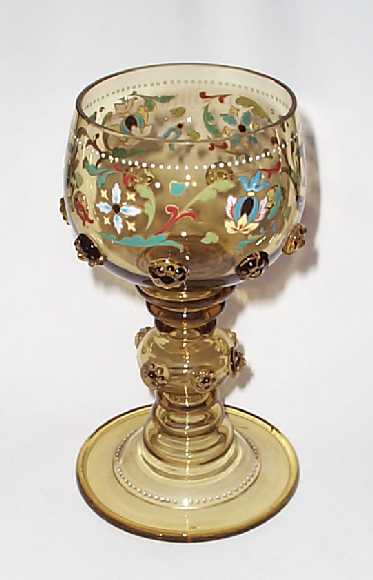
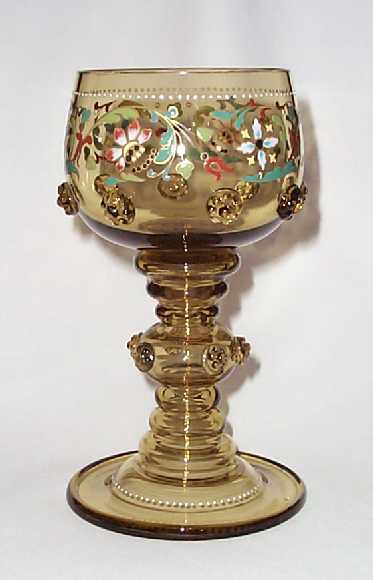
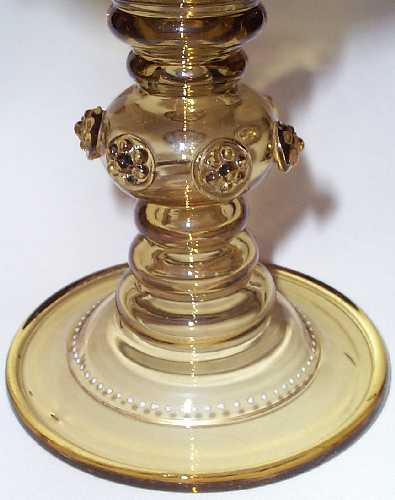
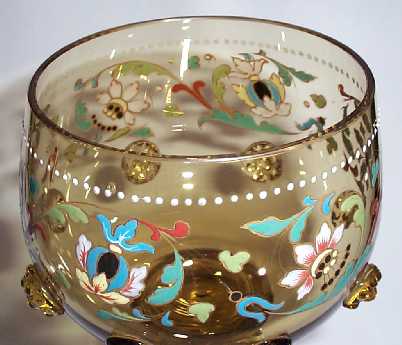
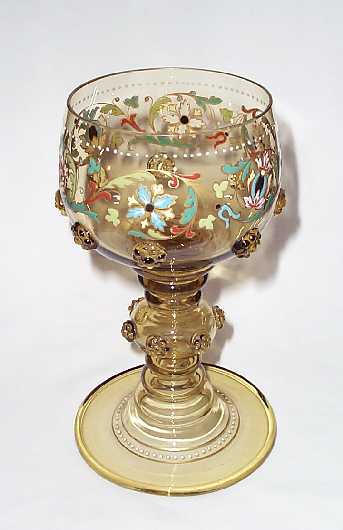
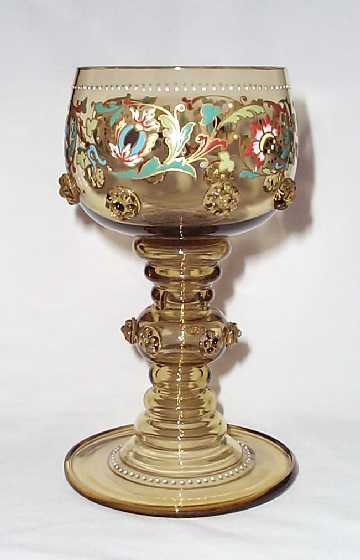
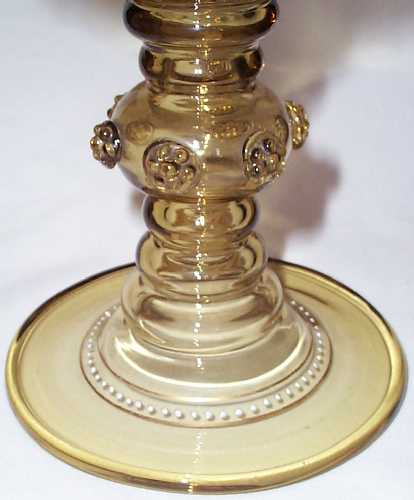
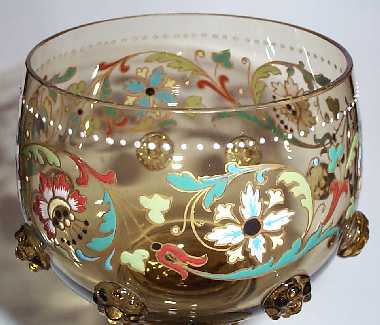
A late 19th Century Theresienthal olive-green Römer with rasperry-prunted knop to the hollow stem, the bowl hand-enamelled and -gilded with Rococo decoration
| Our reference: | 8919 | Date: | c 1885 |
| Manufacturer: | Theresienthal | Origin: | Germany |
| Dimensions: | height 18 cm, weight 340 gm | ||
| Condition: | some losses to gilding, but generally good | ||
 |
 |
 |
 |
Click on any photo to see it full size, then click the 'back' arrow of your browser to return here
Another, very similar (but slightly lighter in weight), late 19th Century Theresienthal olive-green Römer with rasperry-prunted knop to the hollow stem, the bowl hand-enamelled and -gilded with Rococo decoration
| Our reference: | 8920 | Date: | c 1885 |
| Manufacturer: | Theresienthal | Origin: | Germany |
| Dimensions: | height 18 cm, weight 285 gm | ||
| Condition: | some losses to gilding, but generally good | ||
 |
 |
 |
 |
 |
 |
Click on any photo to see it full size, then click the 'back' arrow of your browser to return here
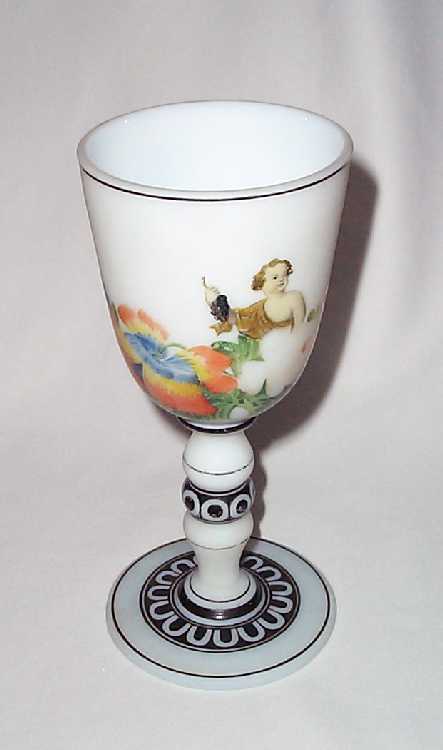
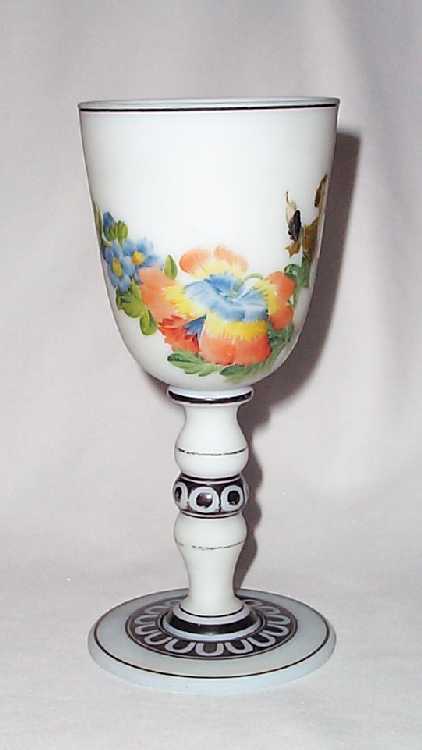
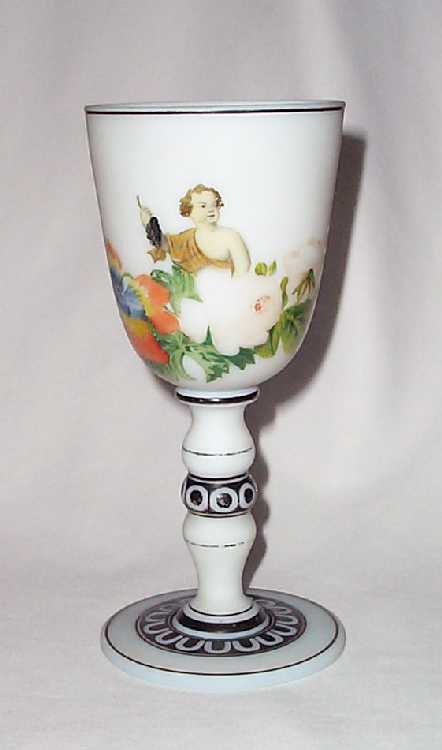
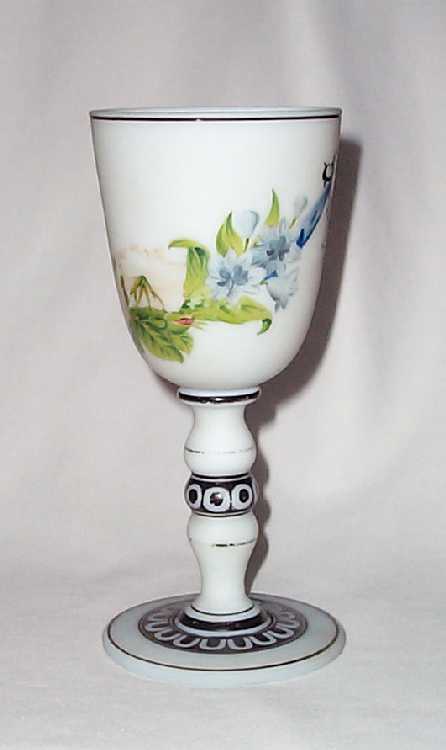
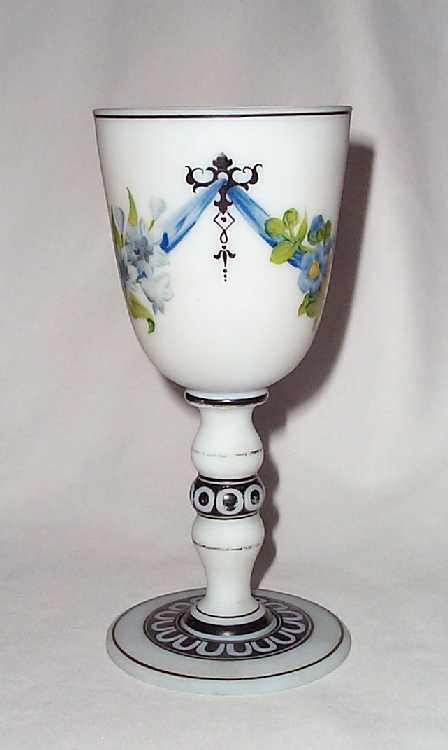
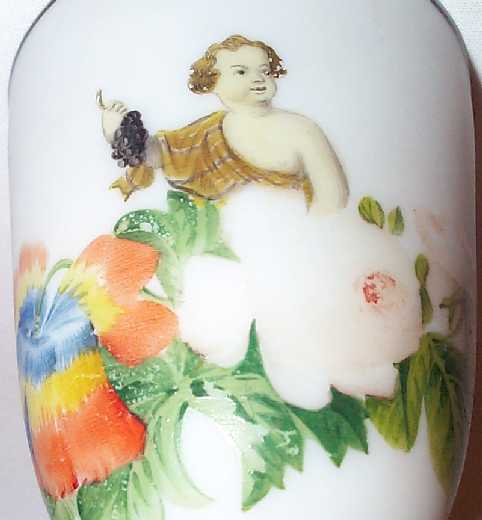
An impressive mid 19th Century hand-enamelled goblet on bobbin stem. The bowl is decorated with floral swags, among which is a cherub (apparently dressed in tartan!) holding a bunch of grapes. Another piece that we think was made in either France or Belgium
| Our reference: | 8902 | Date: | mid 19th C |
| Manufacturer: | unknown | Origin: | France or Belgium |
| Dimensions: | height 17.5 cm, weight 345 gm | ||
| Condition: | minor losses to enamel, but generally good | ||
 |
 |
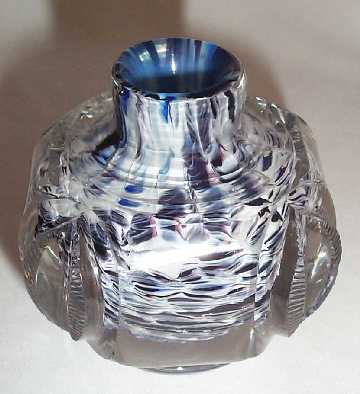
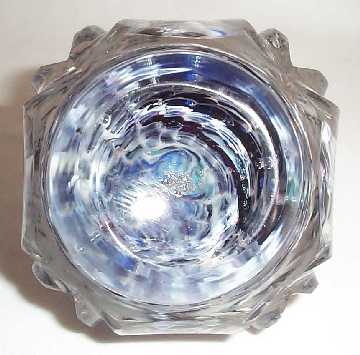 from beneath |
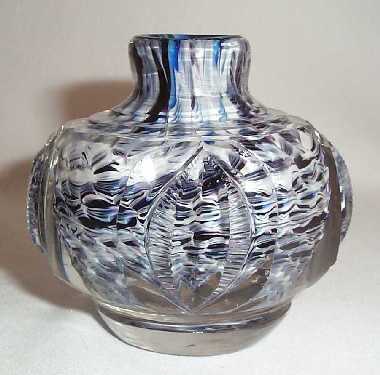
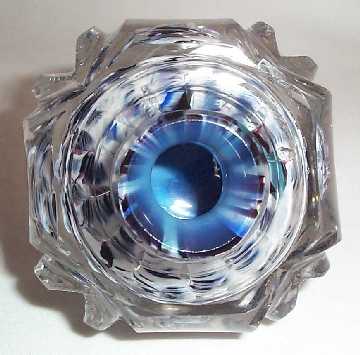 from above |
Click on any photo to see it full size, then click the 'back' arrow of your browser to return here
A most unusual inkwell/pen-holder, from about the middle of the 19th Century, and probably English. The interior is marbled blue, white and amethyst glass with included bubbles. it has then been massively cased in clear glass which has been heavily cut, with a leaf-shape at each corner. It is extremely heavy and therefore stable, as it would need to be to support a quill or dip-pen. The base is step-cut all around, and it may originally have fitted into a base of some sort. The pontil is ground and polished
| Our reference: | 7794 | Date: | mid 19th Century |
| Manufacturer: | unknown | Origin: | probably English |
| Dimensions: | height 7 cm, weight 445 gm | ||
| Condition: | a few very minor chipples, but generally good | ||