
|
glass notes photo library |
|
shop windows: |
|
next page previous page |
| e-mail us |


shop window: glass before 1900 (page 3 of 3)

 |
 |
 |
 |
 |
 |
Click on any photo to see it full size, then click the 'back' arrow of your browser to return here
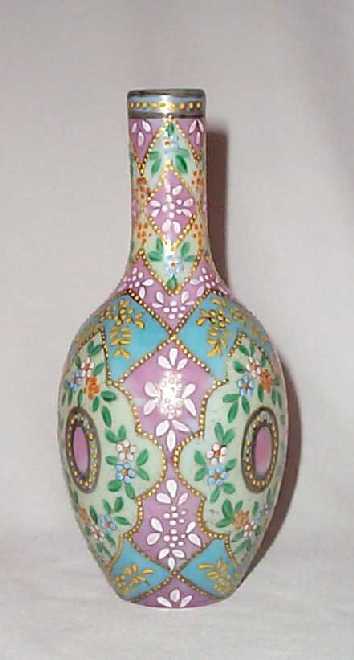
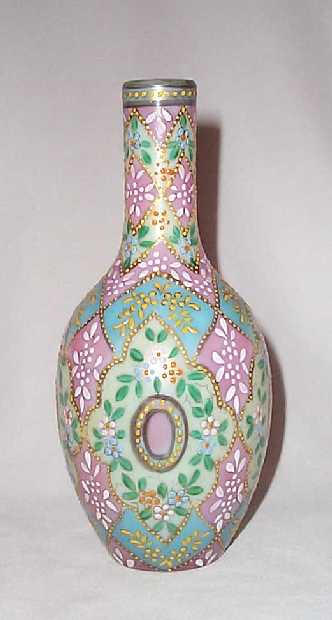
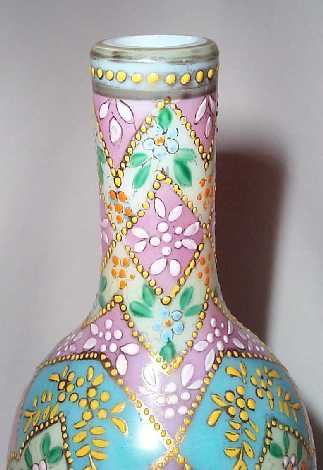
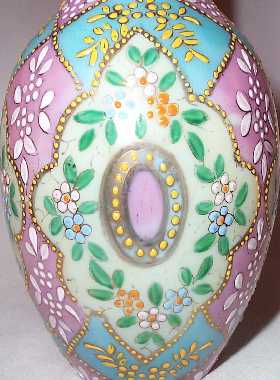
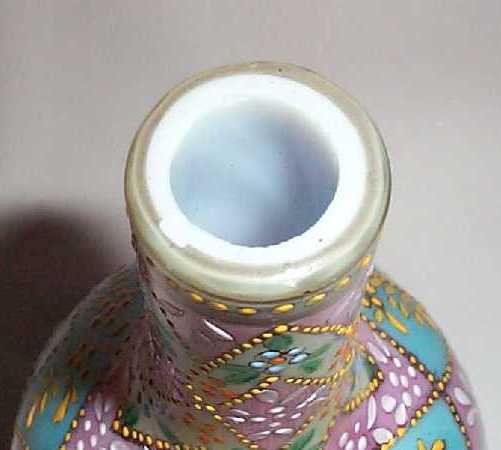
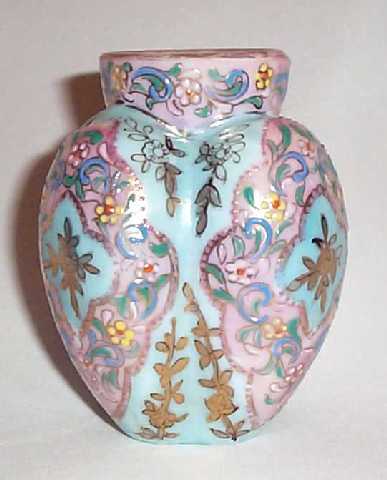
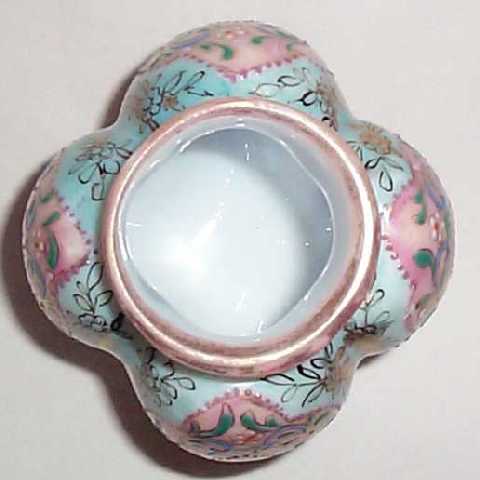
This sort of vase is often attributed to Southern Bohemia, but there is a growing belief that this may be incorrect. The new theory is that the opaline glass body was made in England, and that the Islamic-style decoration was carried out by immigrant French enamellists who are known to have settled in the Stourbridge area in some numbers in the 1840s, a suggestion supported by the fact that they are frequently found in the West Midlands. Certainly Cyril Manley always thought they were English in origin, and the palette of colours used has a distinctly French flavour
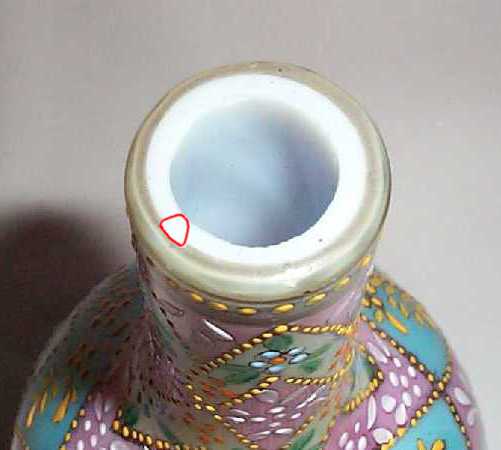
The general condition of the vase is good, but it has one small, shallow chip to the rim (visible in the photos at second right, and outlined in red at right), which has been allowed for in the low asking price
| Our reference: | 8839 | Date: | mid 19th C |
| Manufacturer: | unknown | Origin: | possibly England |
| Dimensions: | height 16.5 cm, weight 170 gm | ||
| Condition: | see description | ||
 |
 |
 |
 |
 |
Click on any photo to see it full size, then click the 'back' arrow of your browser to return here
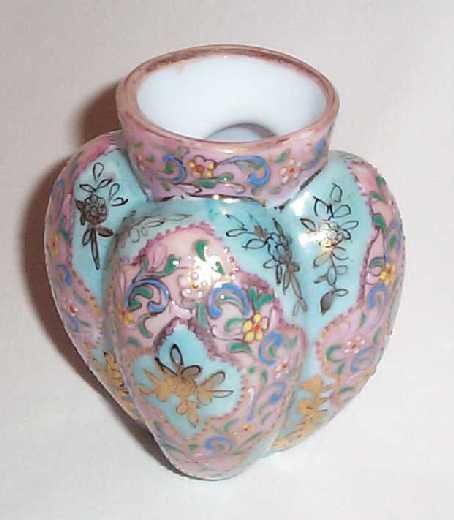
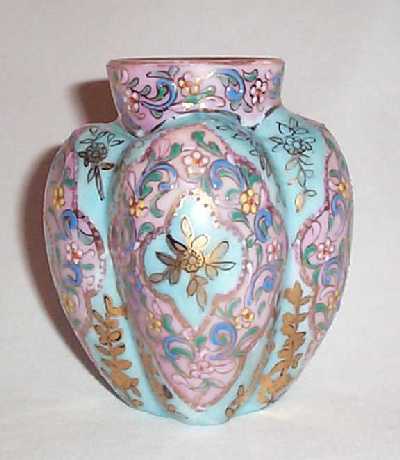
Another vase with similar decoration, this one of lobed shape. The base of this one is numbered 'M 1843.' in black enamel (right) - could this be the year it was actually made?
| Our reference: | 8468 | Date: | mid 19th C |
| Manufacturer: | unknown | Origin: | possibly England |
| Dimensions: | height 10.5 cm, weight 250 gm | ||
| Condition: | very good | ||
 |
 |
 |
 |
 |
Click on any photo to see it full size, then click the 'back' arrow of your browser to return here
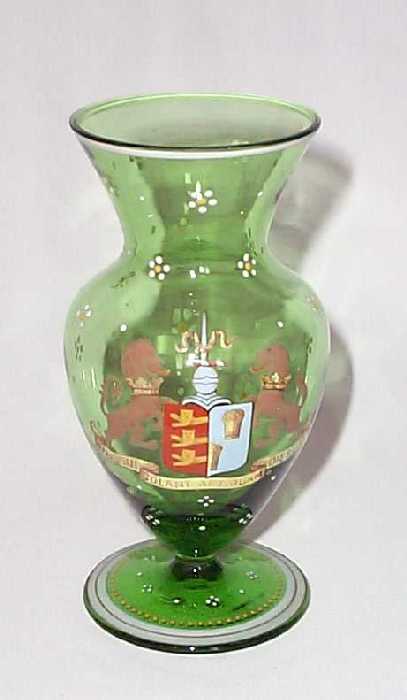
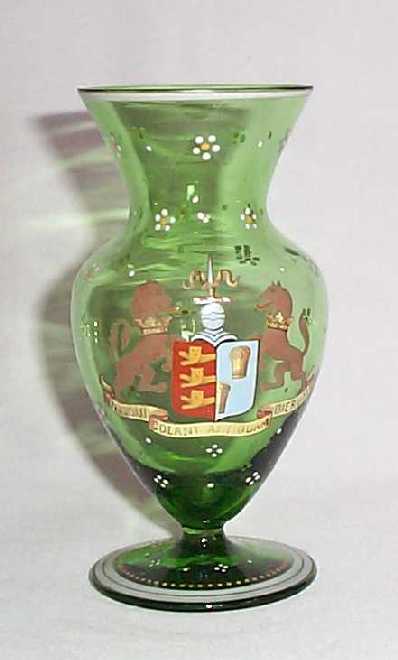
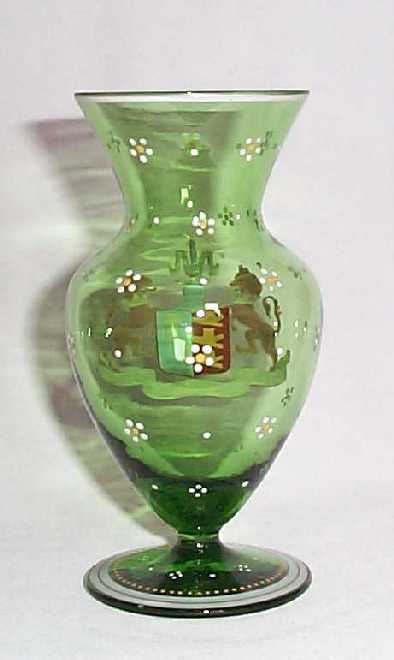
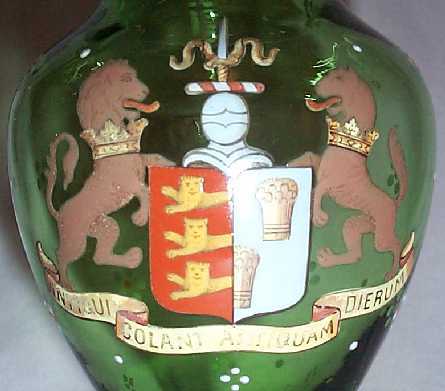
Here's an interesting object! It's a late 19th C 'armorial' vase, made and hand-enamelled in Bohemia. We initially assumed that the arms (see detail at second right) were of somewhere in Germany (as they usually are), but a quick 'Google' proved that they are the arms of the English city of Chester (right), so the vase must have been commissioned by an English importer.
The motto on the vase reads 'ANTIQUI COLANT ANTIQUAM DIERUM' ('Antiquum' has been mis-spelled as 'Antiquam'), which apparently means 'Let the Ancients worship the Ancient of Days'
| Our reference: | 8814 | Date: | late 19th C |
| Manufacturer: | unknown | Origin: | Bohemia |
| Dimensions: | height 13 cm, weight 135 gm | ||
| Condition: | very good | ||
 |
 |
 |
 |
Click on any photo to see it full size, then click the 'back' arrow of your browser to return here
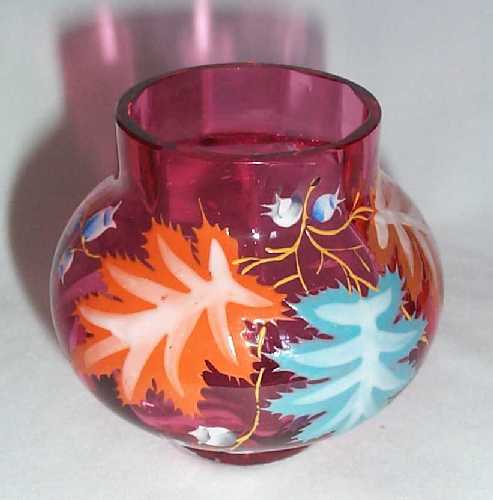
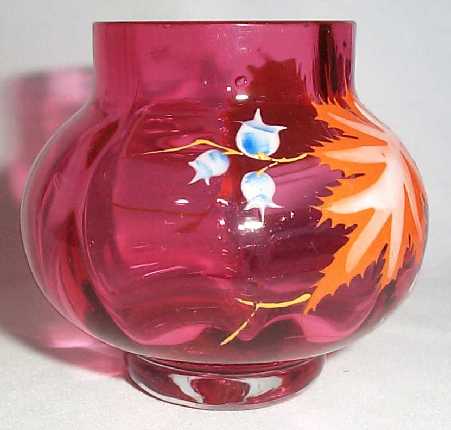
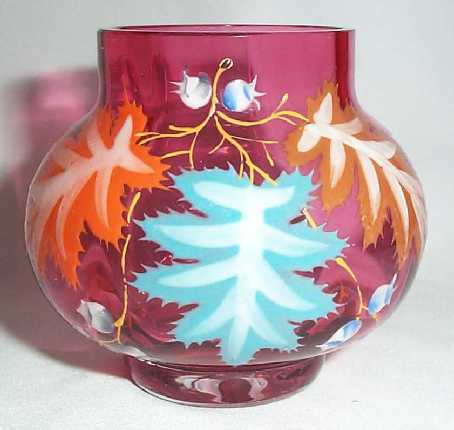
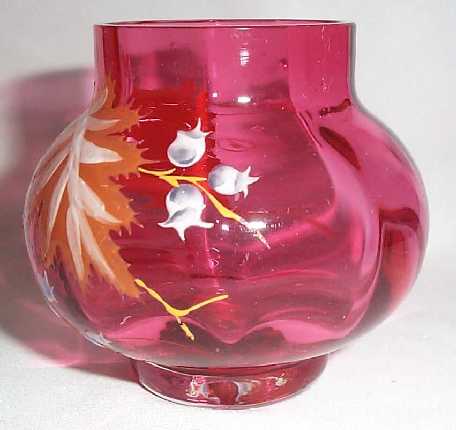
A sweet little cranberry vase, hand-enamelled with fern-leaves. Possibly from the Moser factory
| Our reference: | 8165 | Date: | late 19th C |
| Manufacturer: | possibly Moser |
Origin: | Bohemia |
| Dimensions: | height 6 cm, weight 90 gm | ||
| Condition: | very good | ||
 |
 |
 |
 |
Click on any photo to see it full size, then click the 'back' arrow of your browser to return here
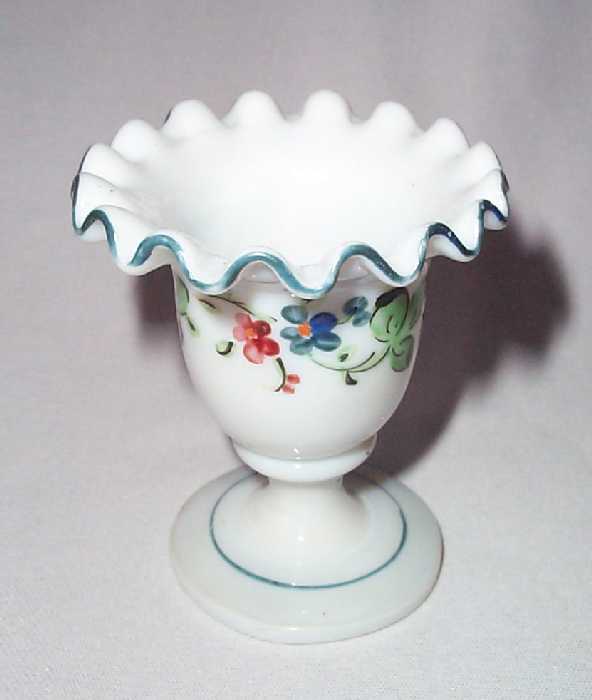
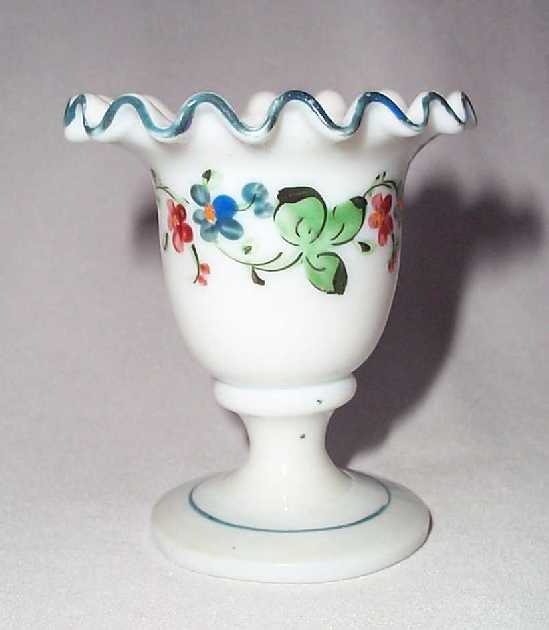
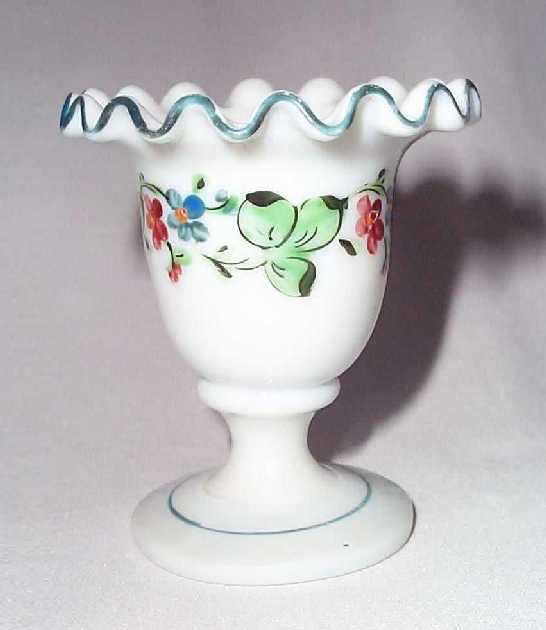
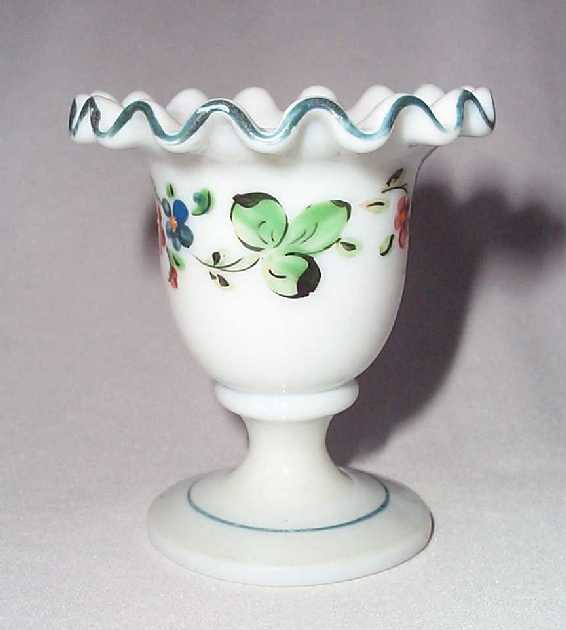
A sweet little early 19th Century eggcup with ruffled rim, the white opaline body decorated with hand-enamelled blue lines, and with floral decoration. The pontil has been neatly cracked off
| Our reference: | 8707 | Date: | early 19thC |
| Manufacturer: | unknown | Origin: | England |
| Dimensions: | height 7 cm, weight 73 gm | ||
| Condition: | very good | ||
 |
 |
 |
Click on any photo to see it full size, then click the 'back' arrow of your browser to return here
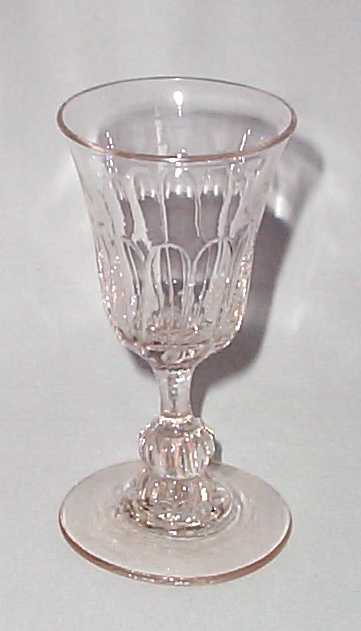
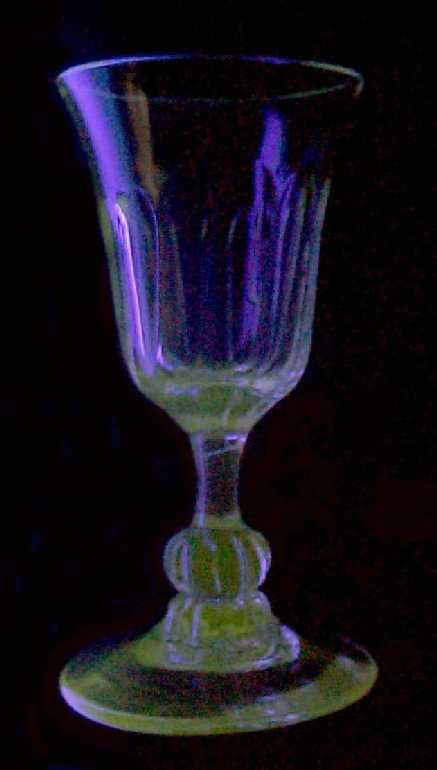
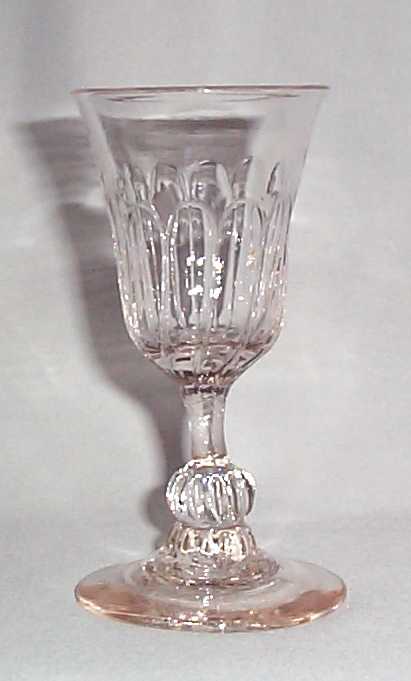
A late 18th Century two-part wine-glass. The gather has been blown into a mould, so that the bell-shaped bowl appears to have been flute-cut, and the baluster stem shows the same ribbing. The pontil beneath the applied foot has been snapped off. The body has a pinkish/brownish tinge, and the glass fluoresces slightly under UV light (see centre photo, above)
The condition of th glass is generally good, but I believe the rim has been ground to remove a chip. The proportions still look OK, so I don't think much has been taken off, but the price reflects this repair
| Our reference: | 8792 | Date: | late 18th C |
| Manufacturer: | unknown | Origin: | England |
| Dimensions: | height 11 cm, weight 105 gm | ||
| Condition: | see description | ||
..... carry on to
shop window: pre-War glass
shop window: post-War glass
shop window: pressed glass