
|
glass notes photo library |
|
shop windows: |
|
next page previous page |
| e-mail us |


shop window: glass before 1900 (page 2 of 3)

 |
 |
 |
 |
 |
Click on any photo to see it full size, then click the 'back' arrow of your browser to return here
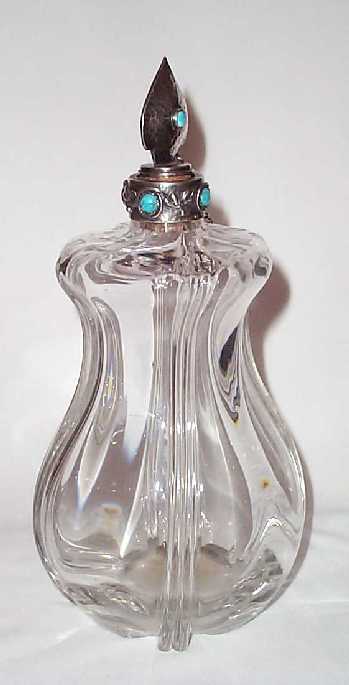
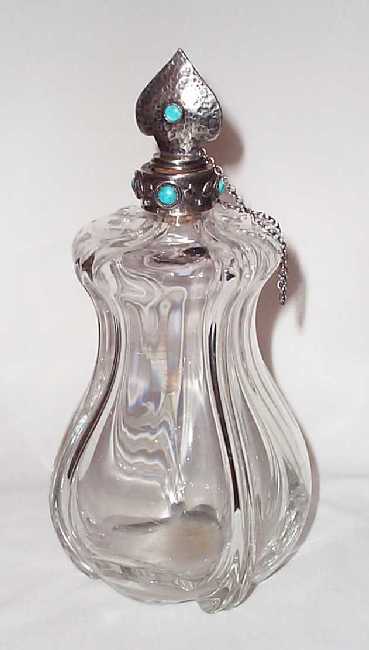
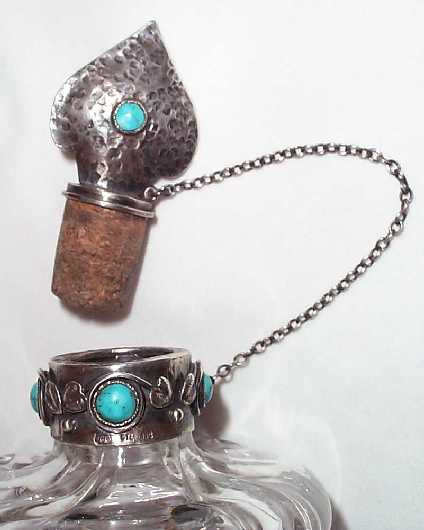
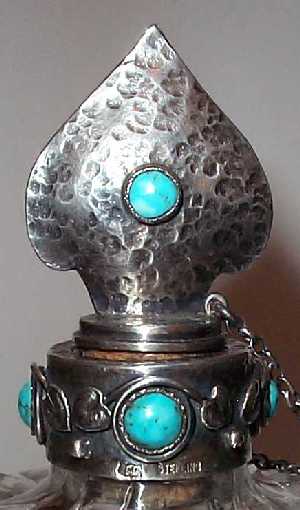
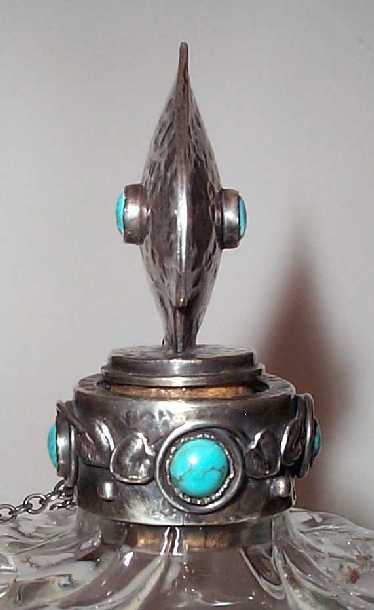
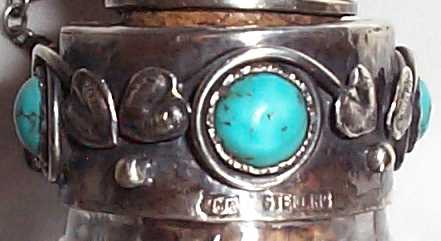
A simply outstanding Arts & Crafts decanter, the body of waisted form with four evenly-spaced vertical double-ribs. Both stopper and collar are of hand-crafted silver The cork-set leaf-shaped stopper (seen face-on and from the side in the details at lower centre and right) is cabochon-set with a roundel of turquoise on each face, and is attached by a security-chain to the collar. The collar has four cabochon-set turquoise roundels, each surrounded by a pair of leaves, and is impressed with the letters 'JMP' in a shield-shape, and 'STERLING' (see detail below left, and the hand-drawn version of the maker's mark at right). The 'STERLING' mark makes it almost certain that this superb decanter was made in the USA, but we haven't been able to identify the actual maker. A colleague has suggested that the glass body might be Steuben's grotesque - does anyone out there recognise the workmanship?
 |
 |
| Our reference: | 8533 | Date: | late 19th C |
| Manufacturer: | unknown | Origin: | USA |
| Dimensions: | height 21 cm, weight 725 gm | ||
| Condition: | very good | ||
 |
 |
 |
 |
 |
 |
 |
Click on any photo to see it full size, then click the 'back' arrow of your browser to return here
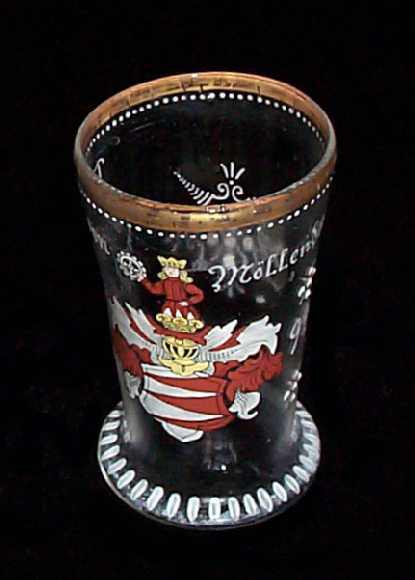
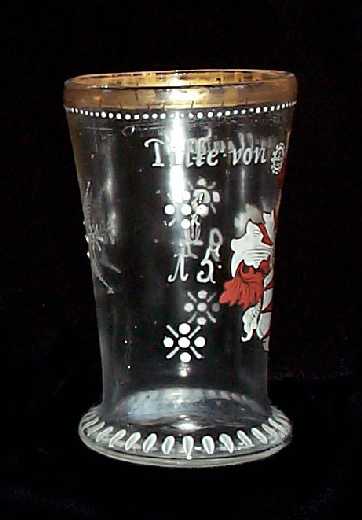
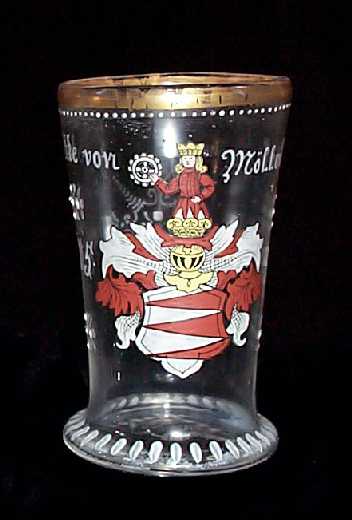
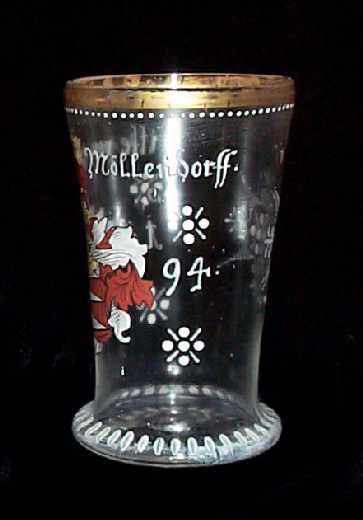
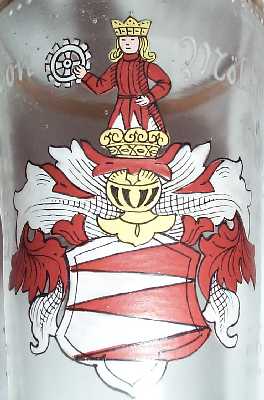
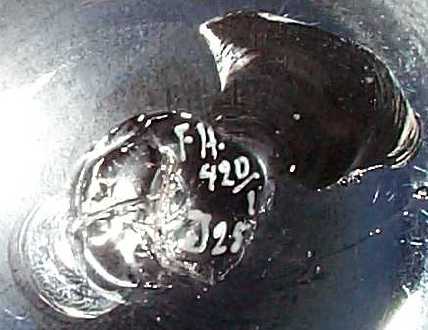
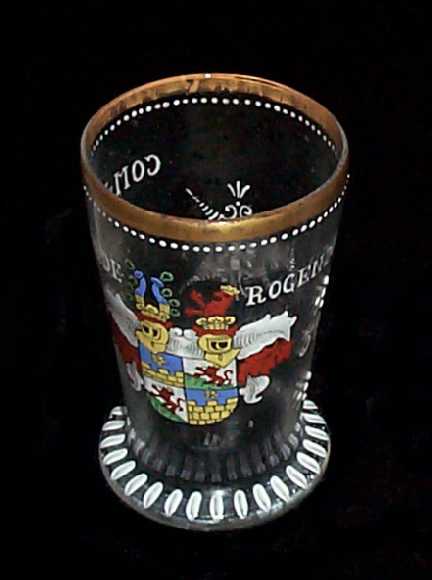
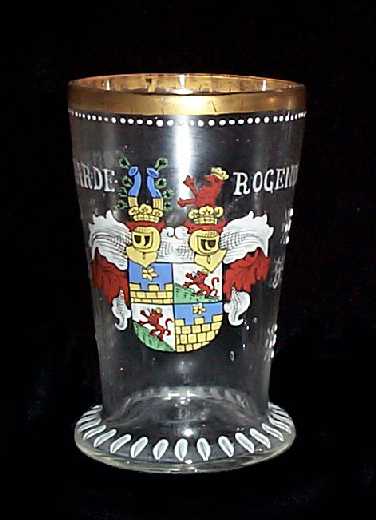
The first of two late 19th Century hand-enamelled beakers from the Fritz Heckert studio. This sort of 'Historismus' glassware was extremely fashionable in Germany in the 19th Century, rather as the legend of King Arthur and the Round Table was in England. This one is marked 'Titke von Möllendorf, 1594' with an elaborate coat-of-arms. Sometimes the pieces were reproductions of genuine old glassware, sometimes they were only loosely based on pieces from the period. Although there was no intent to deceive, the studio has even applied a thin enamel wash to the interior, and tried to make the gilding look distressed, so as to give the beaker a more authentic 'aged' look. The base is signed 'FH.', '420/1' and 'J25' in white enamel, in typical Heckert fashion
| Our reference: | 8904 | Date: | late 19th C |
| Manufacturer: | Fritz Heckert | Origin: | Silesia, Germany |
| Dimensions: | height 12 cm, weight 155 gm | ||
| Condition: | very good | ||
 |
 |
 |
 |
 |
 |
 |
Click on any photo to see it full size, then click the 'back' arrow of your browser to return here
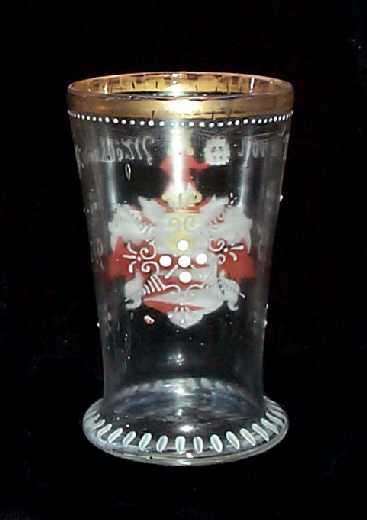
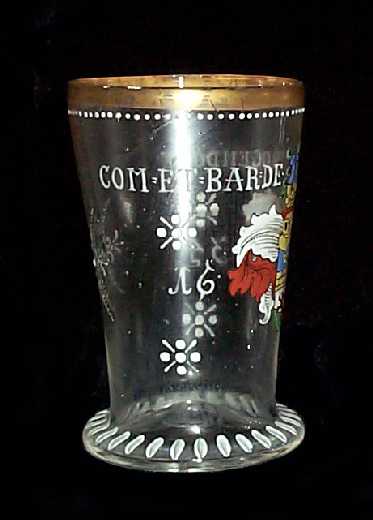
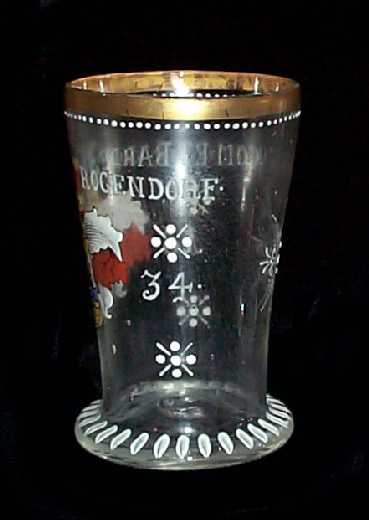
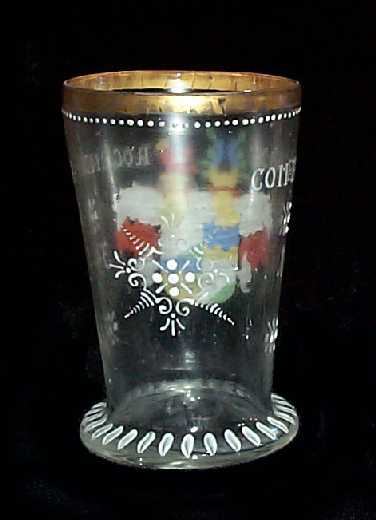
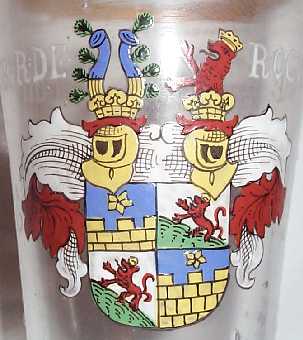
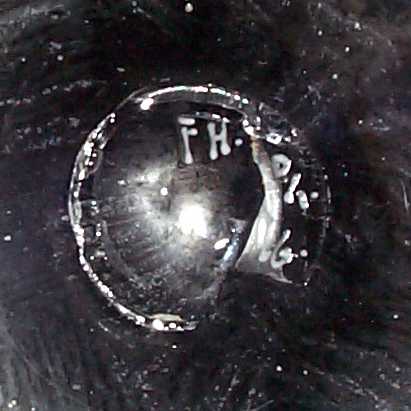
The second of two late 19th Century hand-enamelled beakers from the Fritz Heckert studio. This one is very similar in execution, with the same 'distressed' gilding and 'aged' enamel wash, but is marked 'COM:ET:BAR:DE.ROGENDORF, 1634' with an even more elaborate coat-of-arms. The base is signed 'FH.' in white enamel, as before. However, a sliver of glass from the cracked-off pontil has been lost, so that the shape and pattern numbers now say '20/1' and '16', whereas we believe they would have said '420/1' and 'J16'
| Our reference: | 8905 | Date: | late 19th C |
| Manufacturer: | Fritz Heckert | Origin: | Silesia, Germany |
| Dimensions: | height 11.5 cm, weight 170 gm | ||
| Condition: | very good | ||
 |
 |
 |
 |
 |
 |
Click on any photo to see it full size, then click the 'back' arrow of your browser to return here '
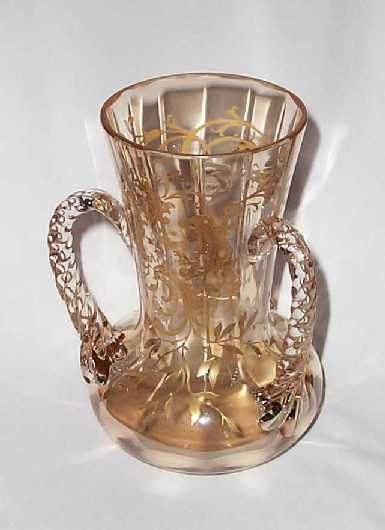
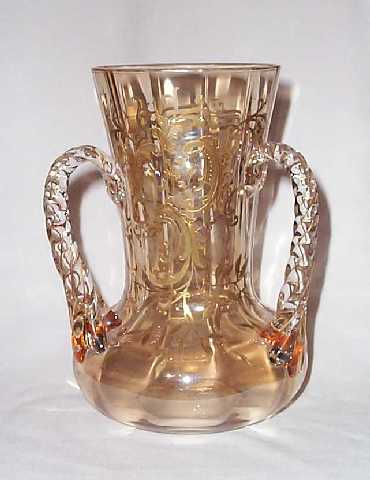
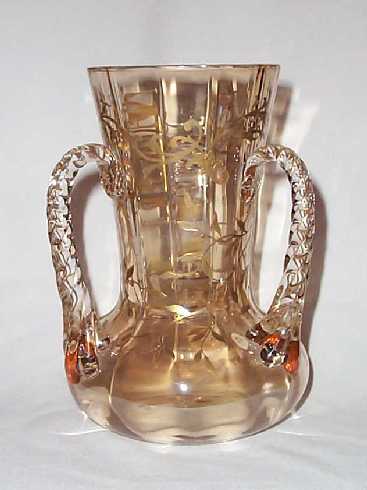
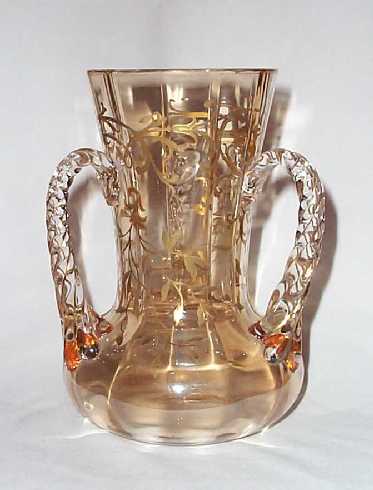
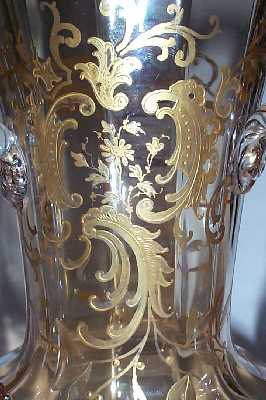
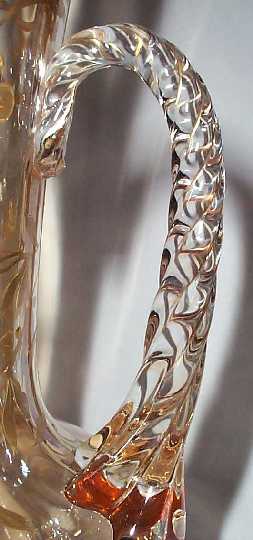
A handsome late 19th Century Josephinenhütte vase, the gold-lustred body almost 'mosque-lamp'-shaped, with three applied rope-twist handles. The body has three hand-gilded sections, divided by the handles - one rococo and two with floral decoration, and the rope-twists of the handles are highlighted with gilt lines
| Our reference: | 8896 | Date: | late 19th C |
| Manufacturer: | Josephinenhütte | Origin: | Silesia, Germany |
| Dimensions: | height 17 cm, weight 640 gm | ||
| Condition: | very good | ||
 |
 |
 |
 |
 |
 |
 |
Click on any photo to see it full size, then click the 'back' arrow of your browser to return here
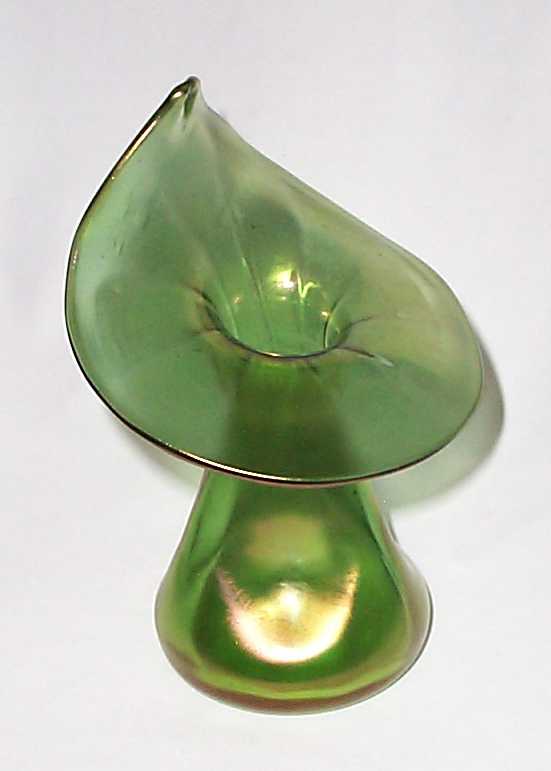
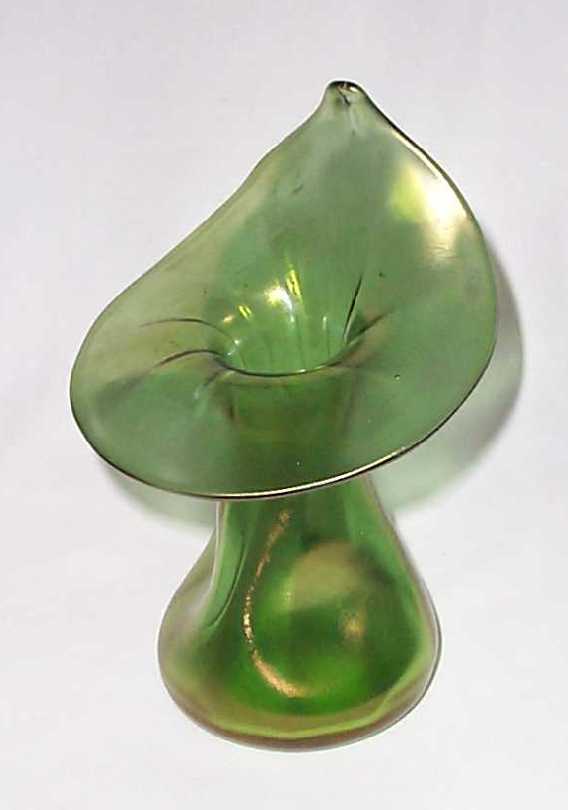
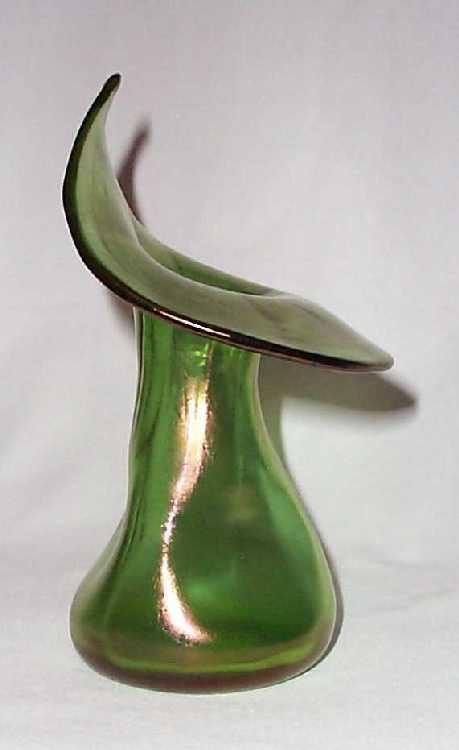
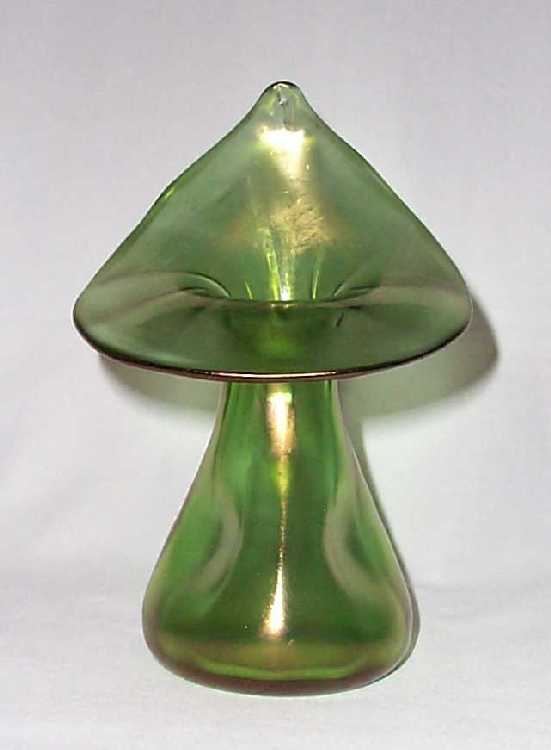
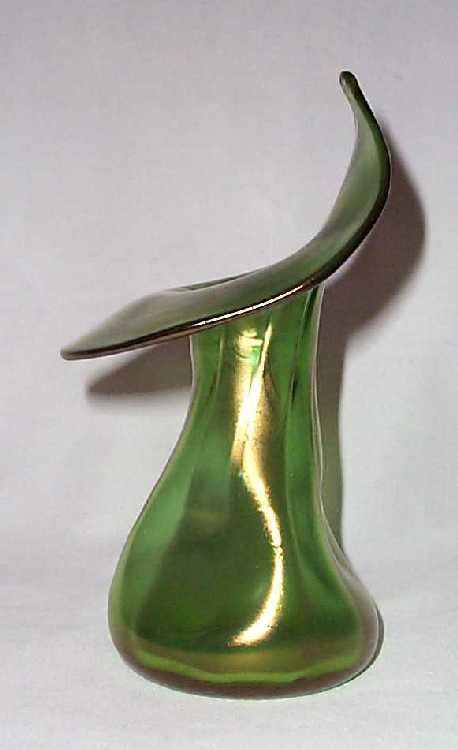
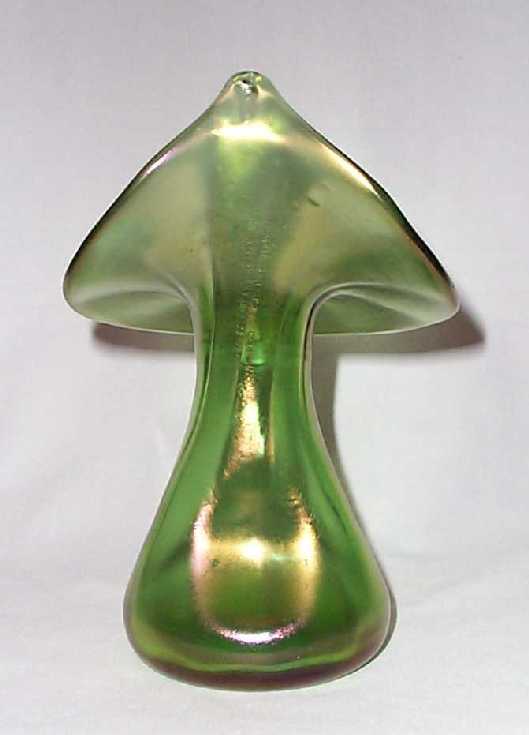
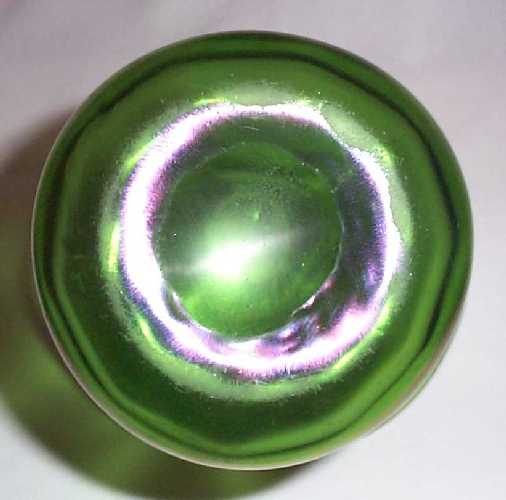
A splendid iridescent Creta 'Jack-in-the-pulpit' vase from the Loetz glassworks. The shape is one of those commissioned by the London importer, Max Emanuel, in the late 1890s
| Our reference: | 8852 | Date: | c 1898 |
| Manufacturer: | Loetz | Origin: | Austria |
| Dimensions: | height 17 cm, weight 305 gm | ||
| Condition: | very good | ||
 |
 |
 |
 |
 |
Click on any photo to see it full size, then click the 'back' arrow of your browser to return here
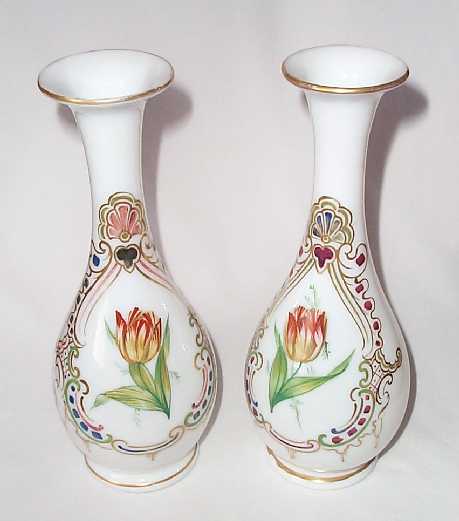
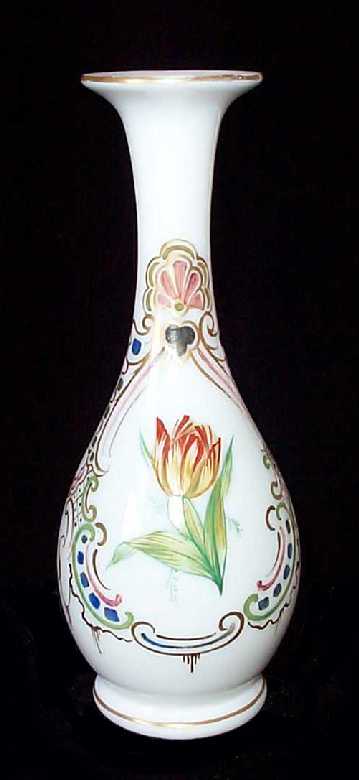
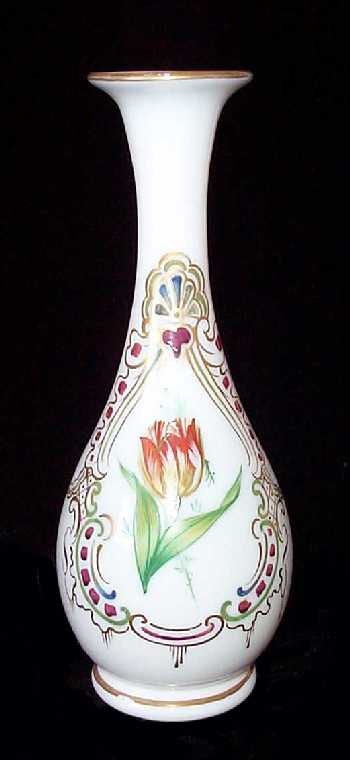
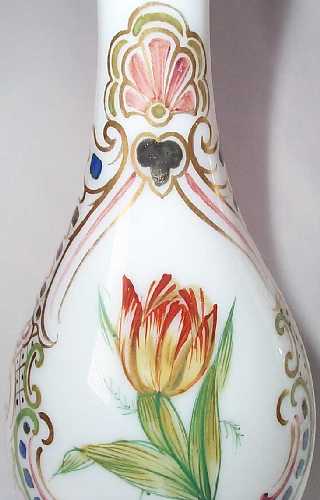
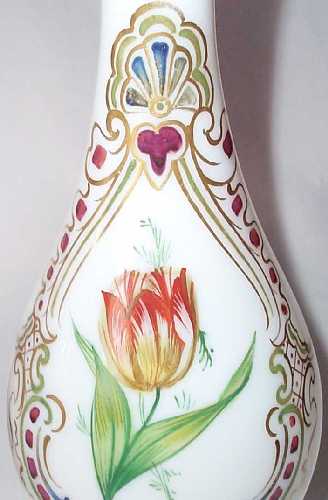
A pretty pair (and they are a genuine pair, with one flower being the mirror-image of the other) of mid 19th Century glossy white opaline vases, hand-gilded and -enamelled with rococo decoration around a single tulip blossom. We think they're probably French, but they could even be English (Richardsons?)
| Our reference: | 8643 | Date: | c 1850 |
| Manufacturer: | unknown | Origin: | probably French |
| Dimensions: | height 20.5 cm, weight 525 gm (the pair) | ||
| Condition: | very good | ||