
|
glass notes photo library |
|
shop windows: |
|
next page previous page |
| e-mail us |


shop window: post-War glass (page 2 of 2)

 |
 |
 |
 |
Click on any photo to see it full size, then click the 'back' arrow of your browser to return here
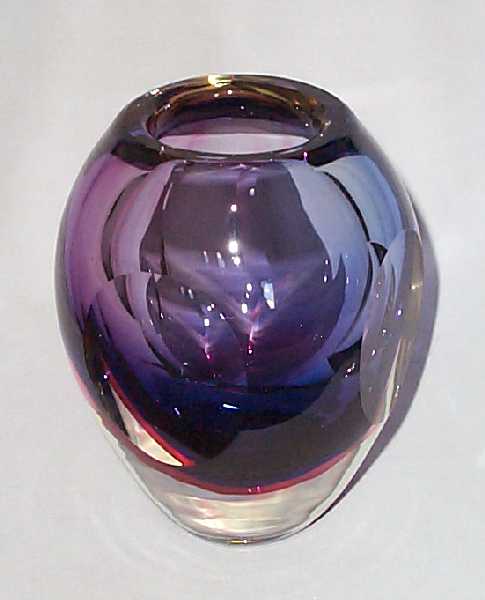
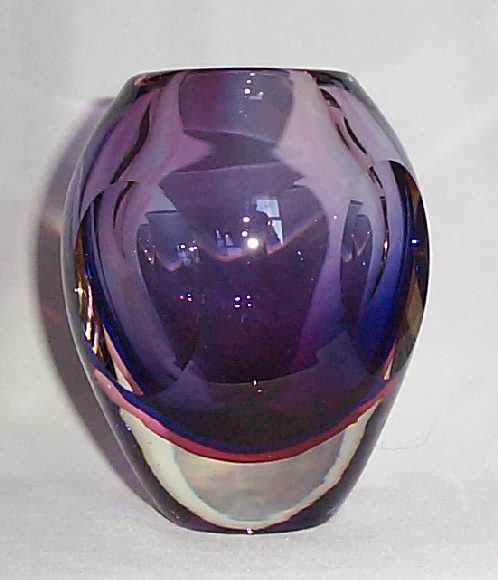
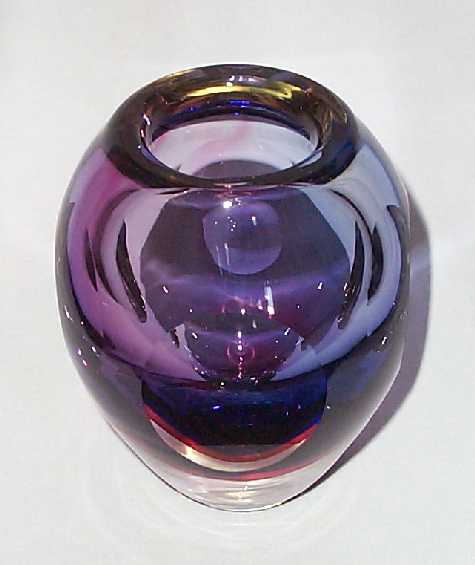
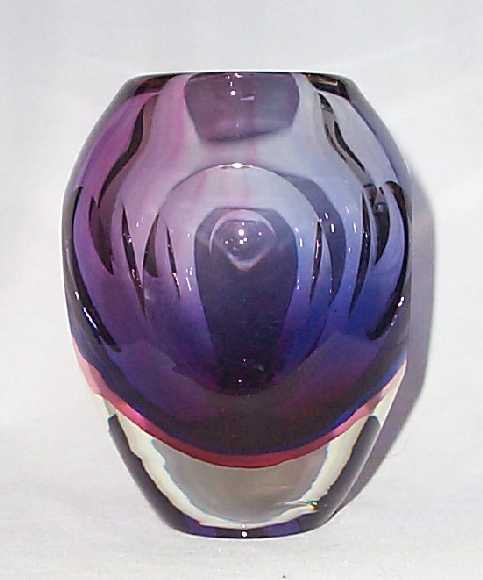
A gorgeous, heavy sommerso vase, of ovoid form with four flat-ground 'portholes'. From the 'blu/rosso' series designed by Flavio Poli for Seguso Vetri d'Arte, circa 1954
| Our reference: | 8827 | Date: | c 1954 |
| Manufacturer: | Seguso Vetri d'Arte |
Origin: | Italy |
| Dimensions: | height 13 cm, weight 1290 gm | ||
| Condition: | very good | ||
 |
 |
 |
Click on any photo to see it full size, then click the 'back' arrow of your browser to return here
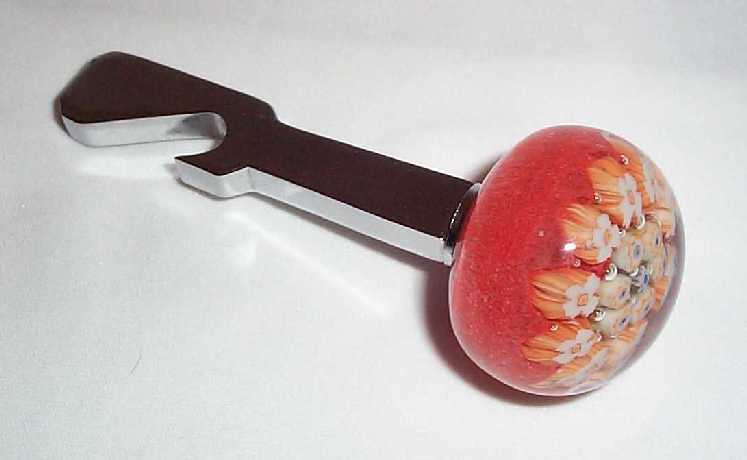
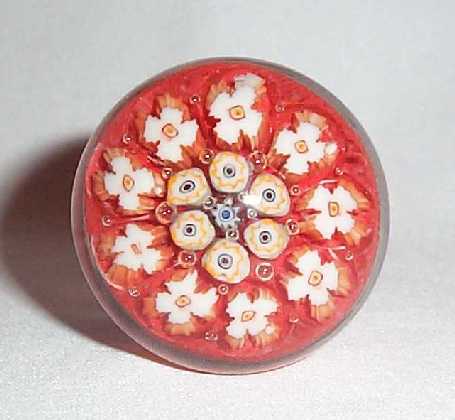
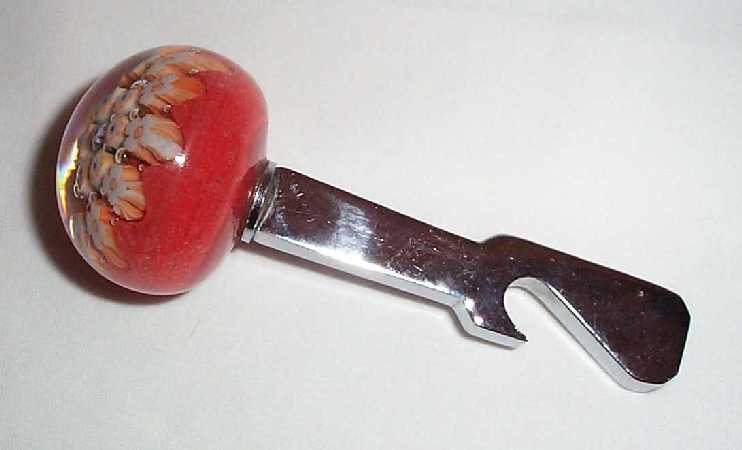
Much less commonly found than Strathearn's paperweights, are the functional items such as corkscrews and bottle-openers (like this one - shown roughly life-sized in the lower photos) mounted with miniature paperweights
| Our reference: | 8716 | Date: | 1970s |
| Manufacturer: | Strathearn | Origin: | Scotland |
| Dimensions: | paperweight diameter 3.5 cm, overall weight 100 gm | ||
| Condition: | very good | ||
 |
 |
 |
 |
Click on any photo to see it full size, then click the 'back' arrow of your browser to return here
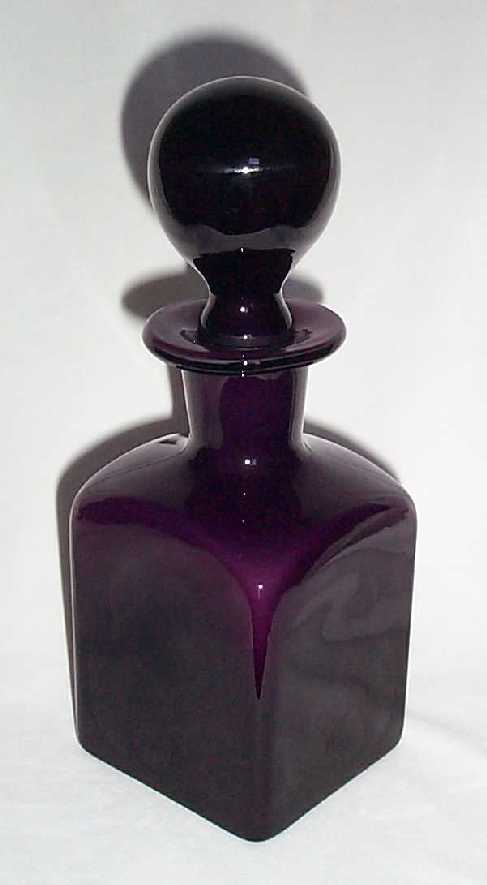
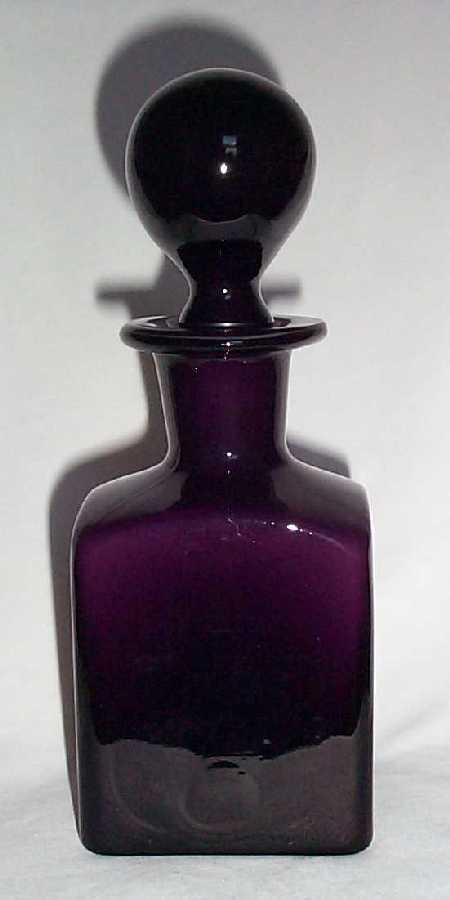
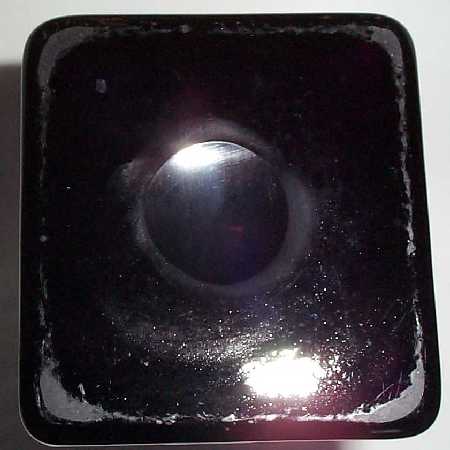
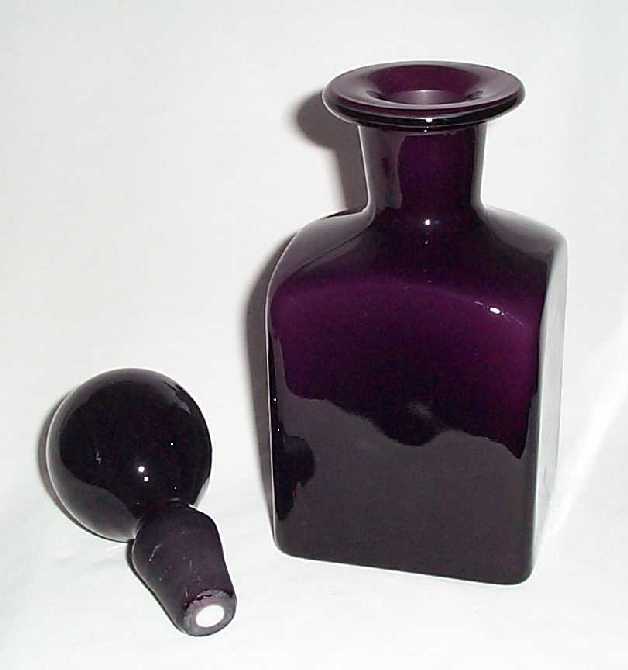
We think this heavy decanter may be a product of the Holmegaard glassworks in Denmark, but we are not 100% sure. The body is cased a deep amethyst over opaque white glass (visible on the end of the stopper in the photo at right), and Holmegaard certainly produced many pieces in the 1960s cased with a colour over white in this manner
| Our reference: | 8456 | Date: | c 1960s |
| Manufacturer: | possibly Holmegaard |
Origin: | possibly Denmark |
| Dimensions: | height 22 cm, weight 1105 gm | ||
| Condition: | very good | ||
 |
 |
 |
Click on any photo to see it full size, then click the 'back' arrow of your browser to return here
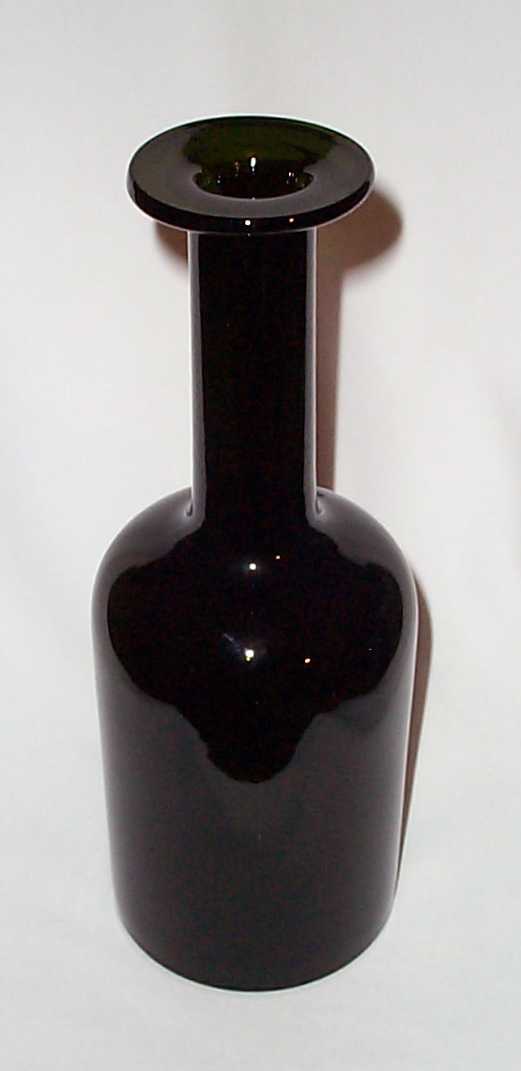
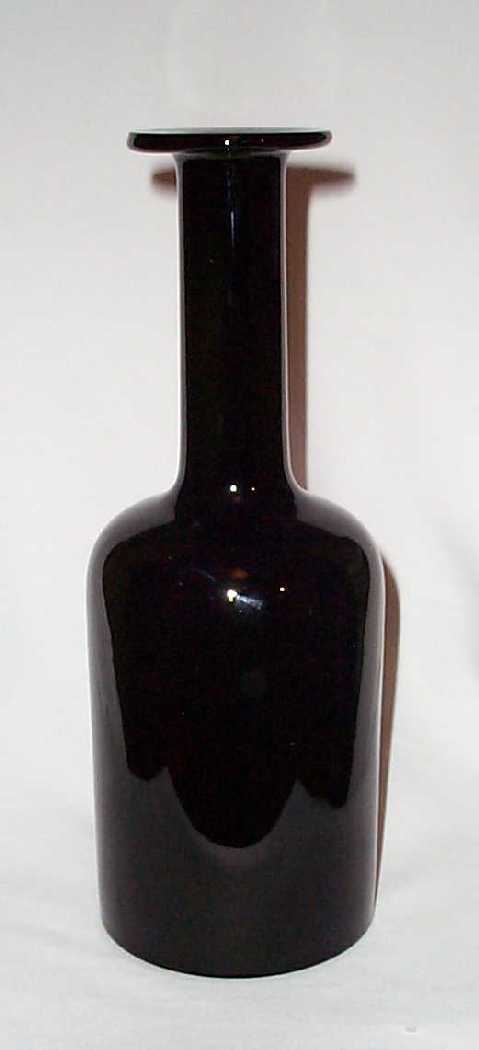
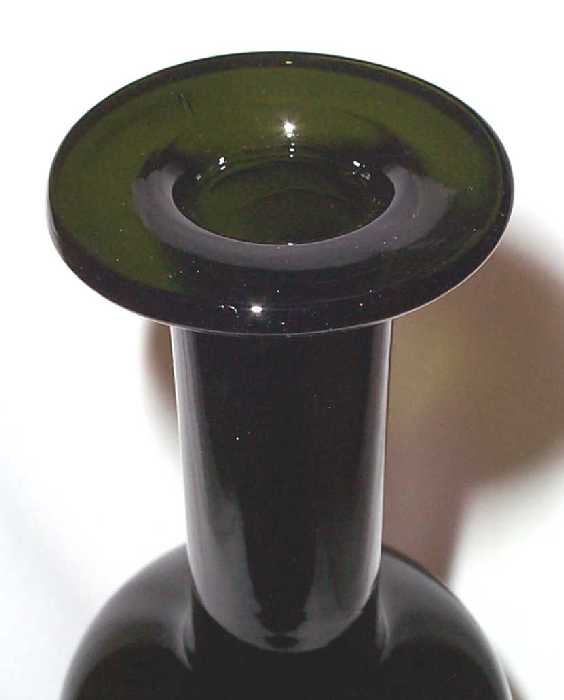
An early 'Gulvvase', in a deep olive-green glass, probably dating from 1962, the year the Gulvvase was designed by Otto Brauer, the Kastrup (later Kastrup-Holmegaard) master glass-blower
For those interested, full production details can be found under 'Gulvvase' in our 'glossary',(section 'F to M')
| Our reference: | 8836 | Date: | c 1962 |
| Manufacturer: | Kastrup | Origin: | Denmark |
| Dimensions: | height 26 cm, weight 670 gm | ||
| Condition: | very good | ||
 |
 |
 |
 |
Click on any photo to see it full size, then click the 'back' arrow of your browser to return here
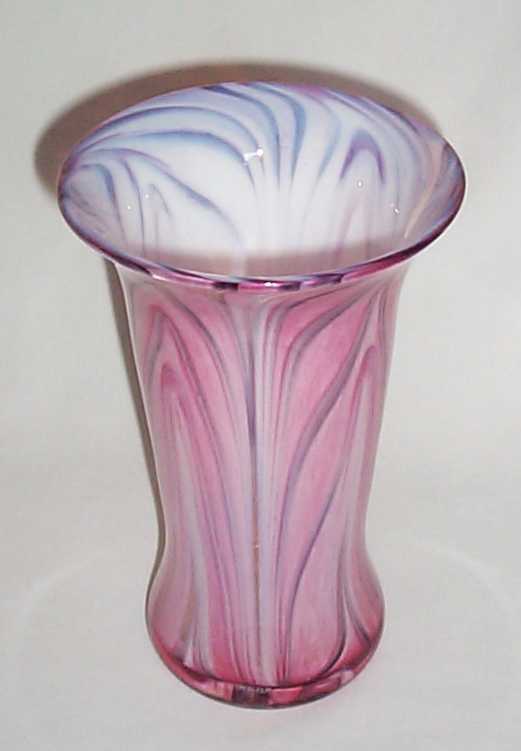
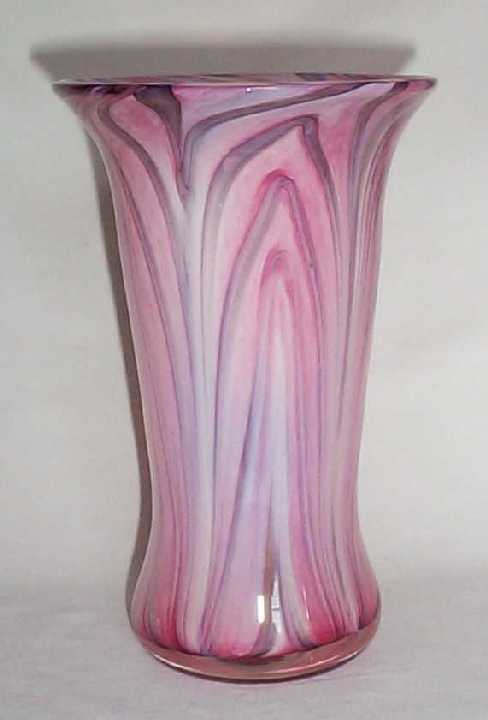
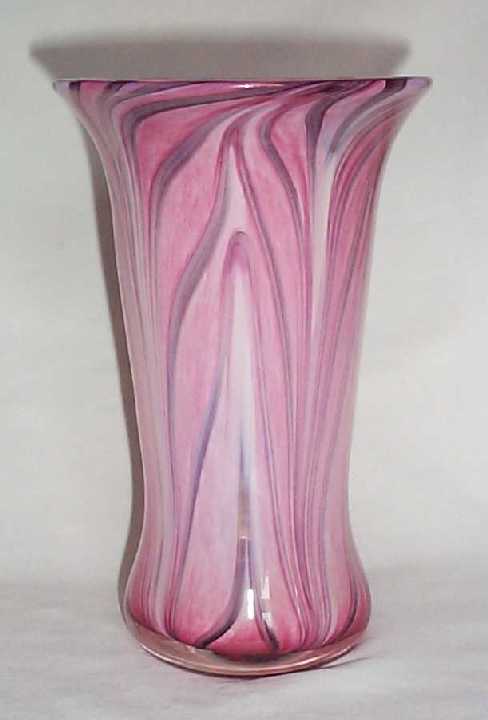
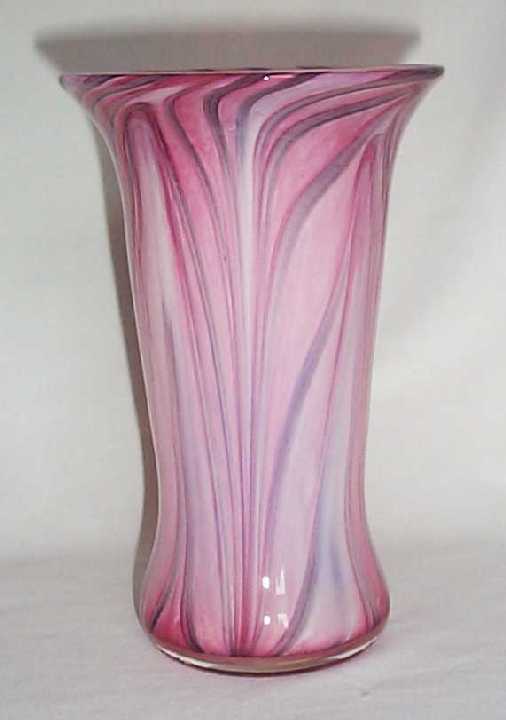
A very pretty Selkirk Glass vase by Peter Holmes (who served his apprenticeship under Paul Ysart at Caithness), with feathered pink and white decoration. The base is engraved "SELKIRK GLASS, SCOTLAND 1991" (see detail below)

| Our reference: | 8311 | Date: | 1991 |
| Manufacturer: | Selkirk Glass |
Origin: | Scotland |
| Dimensions: | height 19.5 cm, weight 635 gm | ||
| Condition: | very good | ||
..... carry on to
shop window: pressed glass
shop window: glass before 1900
shop window: pre-War glass